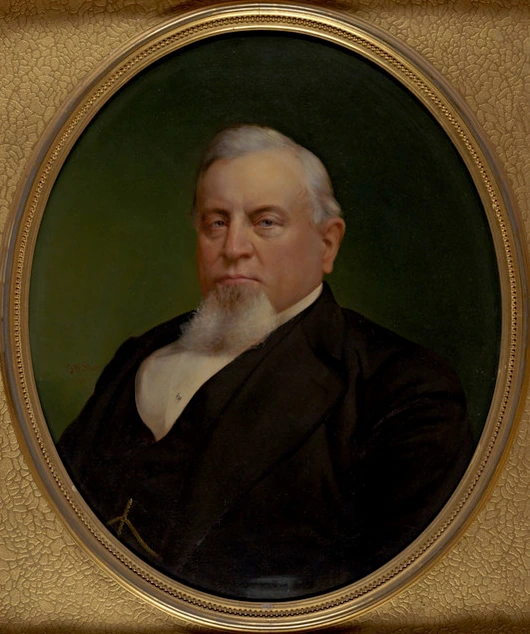
If you're researching the historical figure, you're looking at a 19th-century fortune that, depending on the framing, ranges from a probate-appraised estate of roughly $24 million to a modern inflation-adjusted equivalent of $300 million to $400 million. If you're looking at the contemporary insider-trading Charles Crocker, estimates run from a floor of about $29.3 million (Quiver Quant, as of October 2025) to $95.7 million (Benzinga, recalculated February 4, 2026). This article covers both, starting with the historical figure and then walking through the modern one, so you can land on the right answer.
What "net worth" actually means here
Net worth is assets minus liabilities, full stop. But how you measure those assets matters enormously, especially across two very different time periods and contexts. For the historical Charles Crocker, the cleanest number is the probate-appraised estate value: $24,142,475.84, drawn from documented estate records. Secondary sources like Britannica report his fortune at death as approximately $40 million in nominal terms, while historians using wealth-equivalence models (comparing purchasing power or share of national wealth) land on the $300 million to $400 million range. None of these figures are wrong; they're answering slightly different questions.
For the modern Charles Crocker, the methodology is narrower and more transparent. Both Benzinga and Quiver Quant derive their estimates entirely from SEC-reported insider shareholdings, meaning shares disclosed through Form 4 filings and related public records. Benzinga is explicit about this: its $95.7 million estimate is computed from reported insider share holdings across multiple public companies and is recomputed as underlying data changes. This is not a lifestyle estimate or a rumor-based figure; it's a mechanical calculation from public filings. The limitation is that it only captures what's publicly disclosed, so any private holdings, real estate, or non-reported assets are not in the number.
The historical Charles Crocker: career timeline and income sources

Charles Crocker was born on September 16, 1822, and built his fortune almost entirely through the railroad boom of the mid-to-late 19th century. His career trajectory with the Central Pacific is well-documented. He joined the construction group in 1861 as one of the four Sacramento businessmen who would become the Big Four. In December 1862, the Central Pacific awarded its first construction contract to Charles Crocker & Company, the entity he controlled directly as a Central Pacific subsidiary built specifically to construct the railroad. This structure meant Crocker earned on both sides: as a board member of Central Pacific and as the owner of the contracting company doing the actual building work.
By 1871, Crocker had become president of the Southern Pacific Railroad of California. His corporate footprint continued to expand through 1884, when he oversaw the incorporation and absorption of the Central Pacific into Southern Pacific. That consolidation move was a defining financial moment: it concentrated control of Western rail infrastructure under the Big Four's umbrella. His income sources were therefore layered across construction contracting profits, equity in the Central Pacific and Southern Pacific, and eventually diversified business interests including banking.
Asset breakdown: real estate, banking, and railroad equity
Crocker's wealth was not just railroad stock. Britannica documents that he expanded into real estate and banking, most notably through the Crocker First National Bank of San Francisco, chartered in 1870. A contemporaneous-era scanned publication on American millionaires also ties Charles Crocker's wealth context to railroads and lands blank" rel="noopener noreferrer">Britannica documents that he expanded into real estate and banking. That bank became a significant San Francisco financial institution and represented both an income stream and a capital asset. His real estate holdings in California were substantial for the era, though granular appraisal records are less accessible than his corporate positions.
The core of his balance sheet was the railroad equity and construction profits from Charles Crocker & Company. Because the Big Four controlled both the railroad company and the construction contractor, the profit margin on construction was effectively captured twice: once in contract payments to Crocker & Co. and again in railroad equity appreciation. This self-dealing structure was common for the era and is a significant reason why all four partners accumulated fortunes that dwarfed most contemporaries. Crocker also held interests in other Western industries, though the railroad and banking assets were the dominant drivers of his estate at death.
Peak earnings years and major financial milestones

The peak earning period for the historical Charles Crocker ran from roughly 1863 through the early 1880s, anchored by construction contracting during the transcontinental railroad build-out (completed in 1869) and subsequent railroad expansion across California and the Southwest. The 1869 completion of the transcontinental railroad was the most significant single milestone: it validated the Central Pacific's value and locked in the Big Four's control over Western rail infrastructure for a generation.
The 1884 absorption of Central Pacific into Southern Pacific was the other defining financial event. It was a corporate consolidation that Crocker helped engineer, and it further entrenched the Big Four's monopoly on Western rail. By the time of his death on August 14, 1888, his estate had been appraised at $24,142,475.84 in nominal probate terms, with Britannica citing the fortune at approximately $40 million and later historians placing the inflation-adjusted equivalent between $300 million and $400 million.
The modern Charles Crocker: SEC-tracked insider and estimated net worth
The contemporary Charles Crocker tracked by financial data platforms is a substantially different profile. Identified by SEC CIK 0001061568, this individual's net worth is calculated entirely from disclosed insider shareholdings in publicly traded companies. Benzinga lists his holdings as spanning companies including ImageWare Systems, Franklin Resources, and Teledyne Technologies, among others. Quiver Quant also tracks this individual through Form 4 SEC filings, including reported TDY (Teledyne Technologies) shares.
The divergence between the two platform estimates is worth understanding. Benzinga's $95.7 million figure (recalculated February 4, 2026) and Quiver Quant's floor estimate of "at least $29.3 million" (as of October 29, 2025) reflect different methodologies and potentially different snapshots in time. Benzinga aggregates reported holdings across a broader set of companies, while Quiver Quant may be applying a more conservative or differently scoped calculation. Neither is necessarily wrong; they're just computing from slightly different inputs or applying different valuation assumptions to the same underlying public filings.
| Platform | Estimate | As of Date | Methodology |
|---|
| Benzinga | $95.7 million | Feb 4, 2026 | Aggregated insider shareholdings across multiple public companies |
| Quiver Quant | At least $29.3 million | Oct 29, 2025 | Disclosed SEC Form 4 insider shareholdings (e.g., TDY shares) |
Liabilities and deductions that affect the real number

For the historical Crocker, the gap between gross estate value and true net worth would have been shaped by debts, outstanding obligations, and the illiquidity of railroad equity in 1888. Estate appraisals of that era often reflected book values of assets that were difficult to liquidate quickly, meaning the $24 million probate figure may have been an optimistic snapshot rather than a realizable number. Business liabilities tied to the railroad companies, banking interests, and real estate also would have offset gross assets, though detailed liability records from the estate are not widely accessible in public archives.
For the modern Charles Crocker, the key limitation is what the estimates don't capture. The SEC-based calculations only count publicly disclosed shareholdings. Any private company stakes, real estate holdings, cash accounts, retirement assets, or other non-disclosed wealth are simply not in the number. There's also no public data on this individual's liabilities, meaning the $95.7 million or $29.3 million figures are really a floor on disclosed equity wealth, not a comprehensive net worth statement. Taxes, margin loans against holdings, and any pledged assets would further reduce the true net figure.
Crocker's Big Four partners accumulated similar fortunes through the same railroad structure. Leland Stanford went on to found Stanford University with his wealth. Collis Huntington and Mark Hopkins also left estates in the tens of millions of nominal dollars. Comparing Crocker to other 19th-century businessmen in California, his banking expansion via the Crocker First National Bank of San Francisco was particularly notable, as it diversified his wealth beyond railroad equity in a way that other contemporaries sometimes did not. This is a pattern that appears across many historically wealthy figures: the ones who diversified early tended to preserve wealth across generations more effectively.
If you're curious about wealth profiles of other historical business figures in the same tradition, it's worth noting that contemporary net worth analysis faces some of the same estimation challenges whether you're looking at a 19th-century railroad tycoon or a modern executive. For example, Charles Chip Blankenship's net worth involves a similar process of working from disclosed corporate positions and career earnings to arrive at a credible estimate, rather than simply reading a number off a public filing.
Where the numbers come from and how to verify them today

For the historical Charles Crocker, the primary documentary sources are probate records (the $24,142,475.84 estate appraisal from Stuart Daggett's historical work on Southern Pacific), Britannica's encyclopedia entry (which cites $40 million), and Wikipedia's synthesis of historian estimates ($300 million to $400 million in modern equivalence). These are the best available sources, and none of them are going to be updated further since Crocker died in 1888. If you want to dig deeper, California probate records from the 1880s and contemporary newspaper accounts of his estate are the closest thing to primary sources.
For the modern Charles Crocker (SEC CIK 0001061568), verification is much more straightforward. You can go directly to the SEC's EDGAR database, search by CIK number, and pull Form 4 filings to see the underlying share disclosures that drive the estimates. Benzinga and Quiver Quant are essentially surfacing and calculating from that same public data. The Benzinga figure is date-stamped and recalculated automatically as new filings come in, so checking it again in a few months may yield a different number if the insider has filed new transactions. This is normal and expected behavior for SEC-based estimates.
- Go to SEC EDGAR (sec.gov/cgi-bin/browse-edgar) and enter CIK 0001061568 to pull all Form 4 insider filings for the modern Charles Crocker directly.
- Cross-check Benzinga's estimate against Quiver Quant's to understand the range; the gap between $29.3 million and $95.7 million tells you how much the methodology assumptions matter.
- For the historical Crocker, look for Stuart Daggett's "Chapters on the History of the Southern Pacific" (available via Project Gutenberg) for the probate estate figure.
- Check Britannica's entry on Charles Crocker for the $40 million nominal fortune figure, which represents a middle-ground secondary source between the probate record and the inflation-adjusted estimates.
- If you're comparing across similar profiles, platforms like Benzinga and Quiver Quant update their estimates on a rolling basis as new SEC filings are submitted, so bookmark rather than screenshot.
A note on how estimates age and why the numbers shift
One thing that trips people up when researching net worth is treating any single estimate as permanent. For the modern Charles Crocker, the Benzinga figure shifted because it was recalculated on February 4, 2026, from updated holdings data. If the underlying stocks move significantly in price, or if new Form 4 filings are submitted showing purchases or sales, the estimate changes. This is fundamentally different from the historical Crocker situation, where the estate was fixed at death and the only variable is how you adjust for inflation or wealth equivalence.
This dynamic is not unique to the Crocker profiles. You see the same pattern when researching figures like Charles Mattocks and his net worth or Charles Crenshaw's financial profile, where career changes, new deals, or market shifts can meaningfully change the picture from one year to the next. For historical figures, the comparable issue is that inflation-adjustment methodologies evolve as economists refine models, which is why the $40 million Britannica figure and the $300 to $400 million Wikipedia range both exist for the same person.
Putting it all together: the most useful number for your search
If you came here looking for the historical railroad tycoon: Charles Crocker (1822–1888) had a probate-appraised estate of approximately $24 million in 1888 nominal dollars, a commonly cited fortune of around $40 million, and an inflation-adjusted modern equivalent in the range of $300 million to $400 million depending on the methodology used. His wealth came primarily from railroad construction contracting (through Charles Crocker & Company), equity in Central Pacific and Southern Pacific, and banking assets through Crocker First National Bank of San Francisco.
If you came here looking for the modern SEC-tracked Charles Crocker: as of early 2026, the best available estimates range from a disclosed-equity floor of $29.3 million (Quiver Quant) to $95.7 million (Benzinga), both calculated from publicly reported insider shareholdings in companies including Franklin Resources and Teledyne Technologies. These are estimates of disclosed equity wealth only, not a comprehensive personal balance sheet, and they will update as new SEC filings come in. For the most current figure, checking EDGAR directly or revisiting Benzinga's date-stamped estimate is the most reliable approach.
For broader context on how wealth estimates work for other prominent figures covered on this site, the methodology applied to Charles Coburn's net worth follows a similar logic: start with documented income sources, layer in asset valuations from public records, account for liabilities, and be transparent about what's confirmed versus estimated. That's the standard, and it applies here too.