
Charles Laquidara's net worth as of April 2026 is estimated in the range of $1 million to $3 million, with a typical midpoint estimate around $1.5 million. That range is based on a long career in Boston radio, modest documentary and film appearances, and a quiet post-retirement life in Maui since 2000. There are no publicly disclosed salary figures, tax filings, or court records that pin down an exact number, so this estimate is built from career benchmarks and reasonable assumptions. Here is exactly how that range is constructed and what you should trust or ignore when you see other figures online.
Charles Laquidara Net Worth 2026: Estimate, Sources, Breakdown

Marcus Redfield
10 Apr 2026

First, make sure you have the right Charles Laquidara
This is genuinely important because search results for "Charles Laquidara net worth" sometimes surface profiles about a completely different person. Charles Laquidara (born November 24, 1938) is an American radio disc jockey and Boston broadcasting legend. His career anchors are unmistakable: he hosted "The Big Mattress" on WBCN from 1969 to 1996, then moved to WZLX where he hosted "The Charles Laquidara Radio Hour," a weekday morning show running from 5:30 to 9:00 AM. He retired to Maui, Hawaii, around 2000. His IMDb page (nm0487864) confirms acting credits as himself in "I Am What I Play" (2015) and "WBCN and the American Revolution" (2019), plus a small role in "Next Stop Wonderland" (1998).
The person you do not want to confuse him with is Charles Latibeaudiere, a TV media executive associated with TMZ. Some net-worth aggregator sites appear to mash these two names together or assign Latibeaudiere's executive-producer television credentials to Laquidara's profile, which produces wildly inflated and completely wrong numbers. If a net-worth page describes Charles Laquidara as a TMZ producer or television executive, close the tab immediately. That is not him.
The correct identity anchors to verify you are reading about the right person: "The Big Mattress" on WBCN, Boston rock radio 1969-1996, WZLX, the Massachusetts Broadcasters Hall of Fame, and retirement to Maui. Cross-check these details against any source before trusting its financial figures.
The net worth estimate: low, typical, and high

| Scenario | Estimate | Key Assumption |
|---|---|---|
| Low | $800,000 | Conservative radio salary, minimal investment growth, no significant royalties or residuals |
| Typical | $1.5 million | Mid-range radio earnings over 30+ years, modest savings and investment returns, small documentary appearance fees |
| High | $3 million | Strong salary in peak years at WBCN, meaningful investment/real estate appreciation, royalties from radio-history documentaries |
The honest answer is that no single public document nails this down. What we do have is a 30-plus-year career at two major Boston radio stations during the peak of FM rock radio, a handful of film/documentary credits, and the lifestyle context of a Maui retiree. None of those point to billionaire territory, but none of them point to financial struggle either. A figure in the $1 million to $3 million range is the most defensible range given available evidence.
Where the money came from: income sources and career earnings
Radio salary (primary and dominant source)
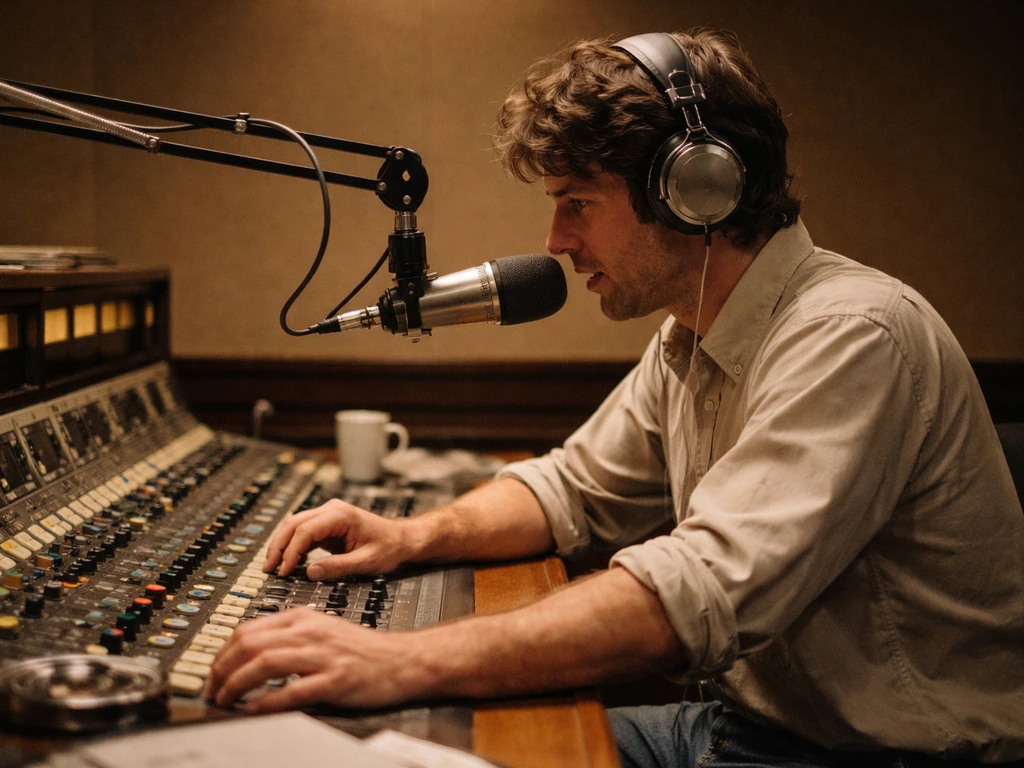
Laquidara's core income was radio. He spent roughly 27 years at WBCN and continued at WZLX, giving him well over three decades of continuous on-air work. Morning drive-time hosts at major-market FM stations in markets like Boston typically earn anywhere from $100,000 to $500,000 per year depending on the era, the station's ratings, and contract terms. In the 1980s and early 1990s, FM rock radio was at its commercial peak, and a personality with Laquidara's tenure and audience would have commanded strong pay at the upper end of that range for his market. Even at a conservative $80,000 average salary across his career (accounting for earlier, lower-paid years), 30 years of work produces $2.4 million in gross lifetime earnings before taxes and living expenses.
Documentary and film appearances
His IMDb credits include documentary appearances as himself in "I Am What I Play" (2015) and "WBCN and the American Revolution" (2019), plus the earlier acting credit in "Next Stop Wonderland" (1998). Fees for documentary interview subjects and minor acting roles are typically modest, ranging from a few hundred to a few thousand dollars per appearance for someone of his profile. These are not material wealth drivers but they do confirm continued public relevance after his retirement from daily radio.
Public appearances and the Farewell Tour
WGBH covered Laquidara's "First Farewell Tour," which suggests he continued making paid personal appearances and live events after leaving daily radio. BroadwayWorld also reports on Laquidara’s “First Farewell Tour” at Boston’s Wilbur Theatre and includes event and ticketing details WGBH covered Laquidara's "First Farewell Tour". Speaker and personal appearance fees for well-known regional media personalities typically range from $2,000 to $15,000 per engagement, depending on the event. This is supplemental income rather than a wealth-building engine, but it contributes to the higher end of the estimate if he did meaningful volume of appearances.
Investments and real estate

Laquidara retired to Maui around 2000. Hawaiian real estate has appreciated substantially over the past two decades, so if he purchased property around retirement, that asset alone could represent significant value today. However, there are no publicly accessible property records in the sources reviewed that confirm ownership details or valuations. This remains an assumption rather than a documented figure. Similarly, any savings from his radio career could have grown through standard market investments over 25-plus years, but again, no verified financial disclosures are available.
How this estimate is calculated
Let me be direct about the methodology here, because transparency is the whole point. There are no salary disclosures, no court filings, no tax records, and no royalty accounting publicly available for Charles Laquidara. What exists is: (1) career length and station prestige as a proxy for earning capacity, (2) industry benchmarks for morning drive-time radio hosts in major markets, (3) public appearance and documentary credit evidence from IMDb and film records, and (4) retirement location as a rough asset-context signal. The low/typical/high range reflects uncertainty in those benchmarks, not three different data sets.
To put that in context, consider how other media personalities of similar stature are profiled. Someone like Charles Attal, a prominent figure in the live entertainment industry, would have income streams that are structurally very different from a regional radio host, yet both require the same benchmark-based methodology when direct disclosures are unavailable. The honesty in net-worth research is in acknowledging that gap.
What could change the number
- New projects or licensing: If WBCN or related archive content generates royalties or streaming revenue (particularly given the 2019 documentary "WBCN and the American Revolution"), that could add ongoing passive income that is not currently factored in.
- Real estate valuation shifts: Maui property values are volatile. A major change in Hawaii real estate markets would directly affect the high end of his net worth estimate if property is owned there.
- Additional farewell or legacy touring: Further public appearance work tied to Boston radio nostalgia events would add supplemental income, though not dramatically.
- Health and estate considerations: At 87 years old as of April 2026, estate planning, healthcare costs, and asset transfers are relevant life-stage factors that could affect net wealth figures in either direction.
- Business interests surfacing: No business ownership or partnerships have been documented in public records reviewed, but if such interests exist and become publicly known, the estimate could shift significantly upward.
How to verify claims and spot bad net-worth sources
Most net-worth pages for personalities like Laquidara are built by aggregators using templated language and no original research. Here is a practical way to evaluate any source you find.
- Check the identity first. Does the source mention WBCN, "The Big Mattress," Boston, or WZLX? If it describes a TMZ producer or television executive, it is about someone else entirely.
- Look for sourced figures. Does the page cite specific salary reports, court records, or industry compensation surveys? Phrases like "estimated based on various trusted sources" with no links or citations are a red flag.
- Cross-check IMDb. The IMDb page for nm0487864 lists his actual credits. If a net-worth claim references projects not on that page, be skeptical.
- Use Hall of Fame and broadcaster records. The Massachusetts Broadcasters Hall of Fame and Music Museum of New England pages are reliable identity and career anchors, even though they do not publish pay figures.
- Treat conflicting figures as a research signal, not a fact. If two sites show $500,000 and $5 million for the same person, neither is likely document-backed. Use the range as a signal of uncertainty, not a data point.
It is also worth knowing that the name "Laquidara" appears in unrelated public records for other individuals in other states. A business filing under a different first name with "Laquidara" as the surname is not Charles the radio DJ, and using that record to estimate his wealth would be a meaningful research error. Always anchor to the full name plus at least one career-specific identifier before trusting any financial record tied to this surname.
For comparison purposes, it can help to look at how wealth profiles are built for other Charles figures in entertainment and media. The approach used for someone like Charles Tebele, a business-oriented figure with more traceable commercial interests, differs from a radio personality whose earnings were largely salary-based over a long career. And a fitness icon like Charles Atlas built wealth through brand licensing, which is a completely different model. Laquidara's profile is closest to a salaried broadcast professional who accumulated wealth through consistent earnings and, potentially, smart retirement asset management rather than any single business windfall.
The bottom line
Charles Laquidara is a Boston radio legend whose career spans more than three decades on the air, from WBCN's "The Big Mattress" to WZLX's morning show, with a quiet retirement in Maui since around 2000. His most credible net worth estimate as of April 2026 sits around $1.5 million in a typical scenario, with a defensible range of $800,000 on the low end to $3 million on the high end. That range is built on career length, major-market radio salary benchmarks, and retirement asset context, not on any publicly available financial disclosure. If you see a dramatically different number online without sourcing that traces back to documented compensation, treat it as speculation. The most reliable thing you can do is anchor any research to his verified career identity and work backward from what is actually knowable about his earnings history.
FAQ
Why do different websites list wildly different Charles Laquidara net worth amounts?
No. The only defensible figure is an estimate because there are no publicly disclosed salary records, verified tax information, or court documents tied to him. If a page states an exact net worth, check whether it cites primary documentation, not templated math based on station prestige alone.
How can I be sure I am looking at the correct Charles Laquidara when researching net worth?
You can usually spot it by identity drift. Confirm the person matches the career anchors, WBCN’s “The Big Mattress” (1969 to 1996), a later run on WZLX with a morning slot, and retirement in Maui around 2000. If “Charles Laquidara” is described as a TV executive or TMZ-related producer, it is likely the wrong person.
What does the $1 million to $3 million range really mean, and how should I interpret it?
The range should be treated as a probability band, not precision. The low end typically reflects conservative salary assumptions and limited investment growth, the high end assumes higher early-to-mid career earnings plus meaningful post-retirement asset appreciation. Any number that ignores uncertainty, or jumps to very high wealth without an identifiable business or royalty stream, is usually weak methodology.
What kind of sourcing should I look for before trusting a net worth estimate?
Be cautious with “verified sources” claims that do not show what was verified. Since income disclosures are not available, many sites rely on industry benchmark tables and generic lifestyle assumptions. A stronger source explains its inputs (career years, role type, era-specific market pay) and shows why those inputs fit his job history.
Do documentary and film credits meaningfully change Charles Laquidara net worth estimates?
They can matter, but only as small supplements relative to decades of radio pay. If the estimate credits him with large film or documentary earnings, that is likely overreach for his profile as a mostly “as himself” documentary subject and minor acting roles.
Could Maui real estate be the reason some websites claim a much higher net worth?
They can, but only if the site can show documented property purchase and sale data. Without property records or valuations, you should treat real estate as an assumption. Also note that net worth depends on ownership and equity, not just “living in Maui.”
Is there evidence that Charles Laquidara built wealth through business ventures or brand licensing?
Generally, no. A long run at major-market stations supports steady earned income, but that is not the same as accumulating large business assets. If a site suggests billionaire-level wealth, look for an alternate driver like a company stake, licensing deal, or ownership interest, because the article’s career evidence is primarily salaried broadcasting.
How can I do a quick back-of-the-envelope calculation to sanity-check net worth claims?
Yes, if you want a check that matches the article’s logic. Use his approximate timeline (around 27 years at WBCN plus additional WZLX hosting) and benchmark the role as a major-market morning drive host during radio’s peak era. Then apply realistic taxes and living costs to estimate what could remain saved and invested, not just gross pay.
How much should personal appearances and live events influence Charles Laquidara net worth estimates?
No, not usually. Speaker fees and personal appearances are typically episodic and capped by event demand, so they can push the high end of an estimate, but they rarely explain large swings in net worth by themselves.
What common research mistake causes errors when using public records to estimate net worth?
You can use the identity anchors to avoid research errors: full name plus at least one career-specific detail, such as “The Big Mattress” on WBCN or his later WZLX morning show. Then ignore financial records tied to other individuals who share only the surname.