
If you searched for "Charles Parnell net worth" and landed here, there is a good chance you mean Charles Stewart Parnell, the 19th-century Irish political leader who dominated Westminster's Home Rule debates and led the Irish Parliamentary Party from 1882 until his death in 1891. This is not an article about a contemporary entertainer or athlete named Charles Parnell. If that is who you were looking for, you will want a different source. Everything here covers the historical figure, his estate, his debts, and what researchers can reasonably estimate his wealth to have been.
Charles Parnell Net Worth: Estimated Wealth Breakdown

Marcus Redfield
5 Apr 2026
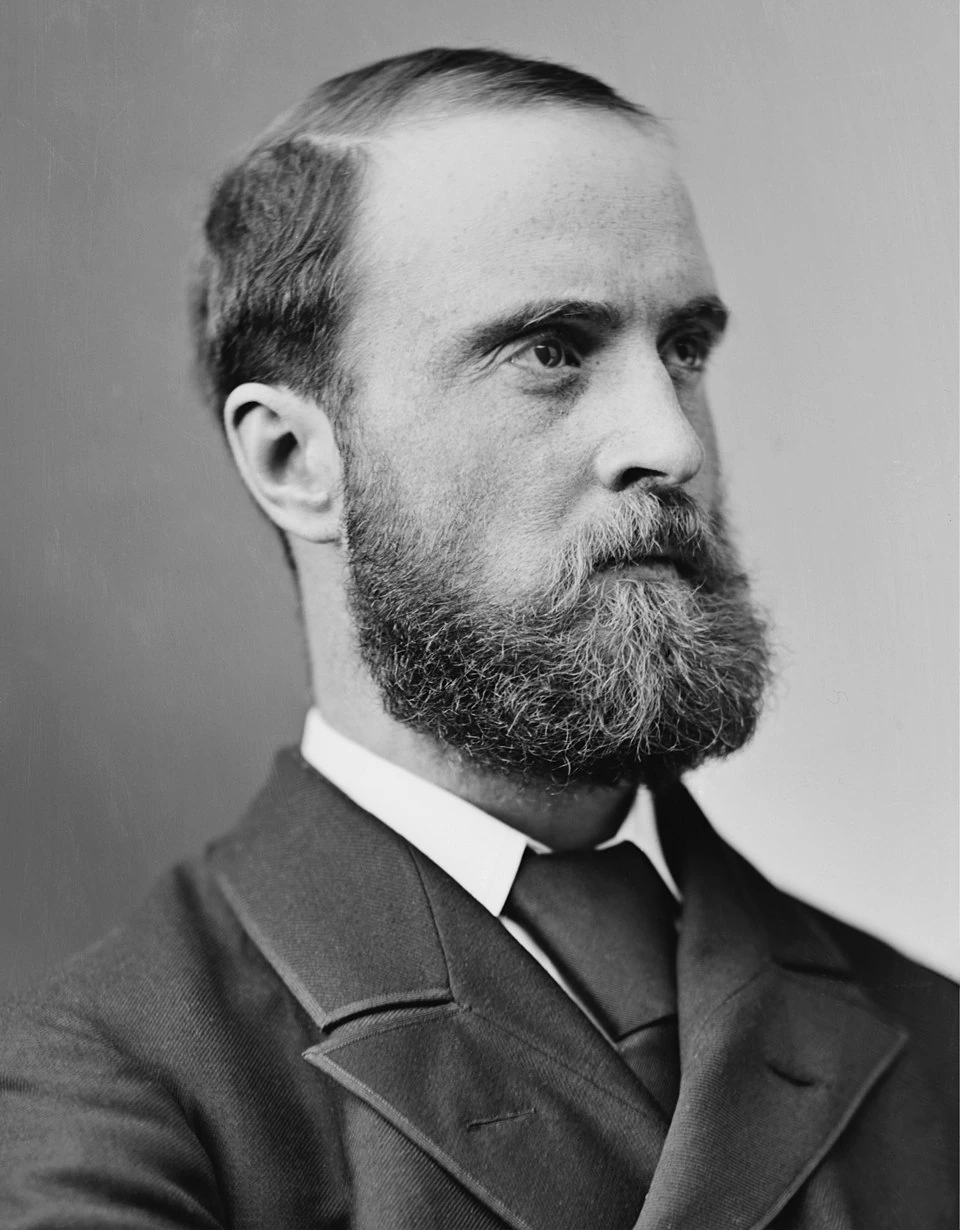
Who Charles Stewart Parnell was and why his net worth is tricky to pin down

Parnell was born on 27 June 1846 at Avondale House in County Wicklow and died on 6 October 1891 in Brighton. He inherited the Avondale estate in 1859 at the age of thirteen, following his father's death, and built his entire adult life around two parallel tracks: managing that landed estate and pursuing political influence at Westminster, where he led the Home Rule League from 1880 to 1882 and then the Irish Parliamentary Party from 1882 until his death. He never held salaried government office. His income came from land, not a paycheck.
That is exactly what makes net worth estimation difficult here. Modern net worth calculations work best when you have documented salary records, investment portfolios, and publicly filed accounts. For a Victorian-era Irish landlord-politician, you are working with estate rent rolls, mortgage deeds, parliamentary records, and family correspondence, many of which are fragmented across multiple repositories. The National Archives of Ireland notes that landed estate collections relevant to annual rents and family papers are held across institutions including the National Library of Ireland and PRONI, meaning no single archive gives you a complete financial picture. Historians piece it together, and the result is always a range, never a precise figure.
The best current estimate: a working net worth range
Taking the available historical evidence together, a reasonable working estimate puts Parnell's net worth at the time of his death in late 1891 somewhere between effectively zero and a modest positive figure, possibly in the range of £2,000 to £8,000 in nominal Victorian terms, before liabilities are subtracted. After accounting for documented and probable debts, the honest answer is that his estate was likely close to net-zero or possibly in a modest deficit. The Avondale estate itself, the main asset, was found by his brother John Howard Parnell to be "heavily mortgaged" immediately upon inheritance in October 1891. John Howard sold the property in 1899, suggesting it could not sustain itself as a going concern. That tells you a great deal about where Charles stood financially at death.
In modern purchasing-power terms, using standard UK inflation conversion for mid-Victorian currency, £1 in 1891 is roughly equivalent to £120 to £140 today (2026). So even an optimistic gross estate valuation of £10,000 in nominal terms translates to perhaps £1.2 million to £1.4 million in 2026 money before debts. After subtracting the Wigram mortgage (documented at £10,000 with interest at five per cent) and other probable liabilities, the net figure shrinks substantially and may reach zero. This is the honest range: gross assets in the low hundreds of thousands in modern equivalent, net worth at or near zero.
Where his money came from across his lifetime

Parnell's income sources were almost entirely land-based. Avondale was a working estate, and the mechanism for income was collecting rents from tenant farmers. Historical research by Ged Martin documents that the estate's net income, after head rents, taxes, administration costs, and the Wigram mortgage interest, ran at around £400 to £500 per year during the latter part of Parnell's life. That is a modest income for a prominent public figure. For context, £500 per year in the 1880s would be a comfortable professional income but nowhere near aristocratic wealth.
His political career generated no salary in the conventional sense. MPs in the UK Parliament were unpaid until 1911, twenty years after Parnell's death. He did receive some financial support from Irish-American fundraising networks sympathetic to Home Rule, and the Irish Parliamentary Party had organizational funds that covered some political expenses, but these were party resources rather than personal income. There is no documented evidence of significant personal savings accumulated from political activity.
One complicating factor on the income side: Parnell's own political stance actively depressed his estate's rental yield. Hansard records from March 1882 show him issuing circulars to tenants in Cork where rents were running at roughly 20 per cent above Griffith's valuation, and he was publicly pushing for rent reductions under the 1881 Land Act. The Land Law (Ireland) Act 1881 helped enable rent reductions by empowering courts to fix judicial rents for a set period, which fits the political pressure Parnell was advocating for in 1882 publicly pushing for rent reductions under the 1881 Land Act. A landlord advocating for lower rents across Ireland was, in effect, advocating for lower income for himself. That tension between his political ideology and his financial interests is a recurring theme in understanding his economic position.
Breaking down the assets: what Parnell actually owned
| Asset / Category | Estimated Nominal Value (1891 £) | Notes |
|---|---|---|
| Avondale House and estate (gross) | £10,000–£20,000 (estimated market) | Sold post-death; heavily mortgaged; value uncertain |
| Annual rental income (net) | ~£400–£500 per year | After taxes, head rents, admin, mortgage interest |
| Personal effects / movables | Minimal (not documented) | No inventory of personal property identified in records |
| Political/party funds | Not personal assets | Organizational resources, not attributable to Parnell personally |
| Wigram mortgage liability | -£10,000 principal | Bearing 5% interest; explicitly documented |
| Additional debts / probable liabilities | Unknown; likely significant | Estate described as "heavily mortgaged" by successor |
Avondale was the centerpiece. It was both his childhood home and his primary asset, but it was also the source of his primary liability. The documented Wigram mortgage of £10,000 at five per cent interest represented an annual interest burden of £500, which is essentially the full net rental income of the estate. In other words, the estate's annual income was being almost entirely consumed by debt service, leaving little room for personal accumulation. When you factor in the possibility of additional mortgages or encumbrances (the estate was described as "heavily mortgaged," implying more than one instrument), the picture becomes even tighter.
The debt side: what the records say about liabilities

The mortgage situation is the most clearly documented financial burden. Historical accounts reference a mortgage of £10,000 on the Avondale estate, with a family member (identified in sources as a relative named Wigram) taking the security in exchange for funds. At five per cent annual interest, this cost £500 per year, a figure that aligned almost exactly with the estate's net income. At least one primary source contains the phrase "a mortgage on my estate was foreclosed" in Parnell's own voice, suggesting the threat of foreclosure was not theoretical. His arrest in October 1881 under the Protection of Persons and Property (Ireland) Act added political coercion to the financial pressure: while imprisoned, his capacity to manage estate affairs and respond to rent defaults was severely curtailed.
Rent collection was also not guaranteed. Victorian-era Irish estates faced persistent challenges collecting rents, especially during the Land League agitation period of the early 1880s that Parnell himself helped organize. Historical records on Wicklow estates show that landlords often had to pursue tenants through legal processes including distraining goods for unpaid rent, with additional fees that nonetheless eroded the practical yield. Given that Parnell was publicly sympathetic to tenant resistance to high rents, it is reasonable to assume his own collection rates faced headwinds. Beyond the Wigram mortgage, other creditors and encumbrances almost certainly existed, though the exact amounts are not fully reconstructable from surviving records.
There were also the practical costs of his public life: maintaining a presence in London for parliamentary sessions, traveling between Ireland and England, and supporting the organizational machinery of his political movement. None of these are precisely documented as personal expenditures, but they were real drains on whatever liquidity he had.
Converting Victorian pounds to 2026 money: how the math works
Translating 1890s wealth into modern terms requires a methodology choice, and there is no single "correct" answer. The two most common approaches are retail price inflation (what did £1 buy then versus now) and income or earnings equivalence (what fraction of a typical annual income did a given sum represent). Both have their uses and their limits.
Using UK retail price inflation from 1891 to 2026, £1 in 1891 is approximately equivalent to £120 to £140 in 2026. So the documented £10,000 Wigram mortgage translates to roughly £1.2 million to £1.4 million in today's money. The net estate income of £400 to £500 per year translates to roughly £48,000 to £70,000 annually in modern terms, which gives a sense of the scale: comfortable but not wealthy by modern professional standards. An estate gross value of £15,000 (a reasonable midpoint estimate for Avondale in the 1890s) translates to approximately £1.8 million in 2026 terms, before debts.
Using income or earnings equivalence gives a different and often larger figure, because Victorian wages were far lower relative to prices. By that measure, the same sums can look several times larger in modern equivalent. For the purposes of this article, the retail price inflation method is used as the primary conversion, as it is the most conservative and most commonly cited in historical financial comparisons. All modern equivalents here should be treated as rough guides, not precise conversions.
How reliable is this estimate, and what could change it
The honest answer is: not highly reliable, but not completely speculative either. The Wigram mortgage figure (£10,000 at five per cent) is explicitly documented and widely referenced. The estate income range of £400 to £500 net per year comes from credible historical research. The description of Avondale as "heavily mortgaged" on John Howard Parnell's succession is independently corroborated by multiple sources. These anchor points give some confidence in the broad picture: Parnell died asset-rich on paper (he owned a country estate) but cash-poor and debt-laden in practice.
What is genuinely unknown is the full scope of liabilities beyond the Wigram mortgage. The phrase "heavily mortgaged" implies multiple encumbrances, but the individual amounts are not documented in publicly accessible records. Personal debts, outstanding bills from his political life, and funeral expenses (his 1891 funeral was one of the largest in Irish history, with documented organization and costs) add further uncertainty. On the asset side, whether Avondale contained timber, mineral rights, or other extractable value (the estate was indeed sold to a Dublin butcher who felled most trees) is relevant but not easily quantified from historical records alone.
New archival discoveries could change the picture. Estate papers held across Irish repositories have not been fully digitized or cross-referenced. A complete rent roll, a detailed probate record, or a discovered correspondence about Parnell's private finances could revise these estimates upward or downward. Researchers relying on sources like the Dictionary of National Biography or scanned primary biographies are working from texts that often blur or omit exact financial statements, using them as starting points rather than definitive accounts.
How this compares to other prominent figures of the era
To put Parnell's financial position in context, it helps to recognize that many landed Irish politicians of his generation were in similar straits: nominal landowners whose rental income was under pressure from tenant agitation, Land Acts, and agricultural depression, while their political lives generated expenses but no salary. He was not uniquely impoverished, but he was not wealthy in the way that English aristocratic landowners with large, diversified estates were. His was a middling estate under severe financial stress, managed by a man whose political mission actively undermined the economic model that funded his own life. That paradox is central to understanding why his net worth, even on the most generous reading of the evidence, was likely close to zero at death.
For readers interested in exploring other financial profiles in a similar vein, the analysis of Charles Parselle's net worth offers another example of how researchers reconstruct wealth estimates for historical and semi-public figures where documentation is incomplete. And if you are curious how modern athletes manage wealth accumulated through shorter, higher-intensity careers, the breakdown of Charles Leno Jr.'s net worth provides a useful contrast in income structure and asset accumulation.
What to take away from all of this
If someone asks for a single number, the most defensible answer is: Charles Stewart Parnell's net worth at death was likely close to zero, possibly modestly negative. He owned a significant estate in nominal terms, but it was mortgaged to at least the value of its income-generating capacity, and probably beyond. In modern purchasing-power terms, the gross estate was worth perhaps £1.5 million to £2 million, but the debts against it likely absorbed most or all of that value. The net figure, by any reasonable reading of the available evidence, was somewhere between a small positive number and a meaningful deficit.
That said, comparing Parnell's situation to someone like Charles Peruto Jr., a contemporary figure whose wealth is tied to a documented legal career, illustrates just how different the evidentiary base is between modern and historical net worth research. For historical figures, the methodology matters as much as the number, and anyone presenting a confident precise figure for Parnell's net worth is almost certainly overstating what the records can support. Similarly, the kind of transparent financial profiling done for figures like Charles Peralo or Charles Porch relies on modern income documentation that simply does not exist for a Victorian landlord-politician whose estate was described as heavily mortgaged the moment he died.
The bottom line: Parnell was a man of significant political stature and nominal landed assets, but his finances were under severe stress throughout his later life, and his estate left his heirs with debt, not wealth. Any estimate of his net worth must carry that context to be honest.
FAQ
Is Charles Parnell net worth best estimated at his peak or at the time of death?
For Charles Stewart Parnell, the most defensible “net worth” measure is his position at death (October 1891), not his peak during the 1880s. The evidence used (notably the Avondale mortgage and the later sale after his death) anchors the assessment to that end point, when the estate accounts are easiest to interpret.
Why doesn’t Charles Parnell net worth resemble a modern salary and investment portfolio calculation?
His personal income was largely rental income net of running costs and debt interest, with little evidence of large liquid savings from politics. That means a net worth estimate should be treated as “estate-based wealth minus encumbrances,” not “money he earned and invested.”
How much could missing mortgages or secondary loans change Charles Parnell net worth?
Yes. The article already treats the Wigram mortgage as the key documented liability, but “heavily mortgaged” implies other encumbrances could have existed. Without complete probate and charge schedules, adding one more mortgage can swing the net figure from near zero to clearly negative.
How can an estate show rental income yet still leave Charles Parnell with little or no net worth?
Because net income can look adequate on paper while still leaving an empty cash position. If most of the rental margin is absorbed by interest (as described for the Wigram debt), the estate may not generate funds for principal repayment, repairs, or political travel costs, so the “wealth” does not convert into net worth.
What’s the most common mix-up when people search for Charles Parnell net worth?
Search results often mix up different people named Charles Parnell. The article clarifies it is Charles Stewart Parnell (1846 to 1891), the Irish political leader, so any net worth number attributed to a modern entertainer or athlete with the same name would not match this context.
How can I tell whether a Charles Parnell net worth estimate is overstated?
If you see a single confident number for Charles Parnell net worth, treat it skeptically unless it explains its assumptions and provides a source for liabilities beyond the main mortgage. The records are fragmented, so precision is rarely justified for a Victorian landlord-politician.
Why do different sites give different “modern money” versions of Charles Parnell net worth?
The article uses retail-price inflation as the primary conversion because it tends to be conservative, but the income-equivalence approach can produce a larger modern-equivalent number. If you compare estimates across websites, make sure they use the same conversion method or you may be comparing different scales.
Does Avondale’s value automatically equal Charles Parnell net worth?
An “estate gross value” can be misleading if the asset is not easily liquid. The article notes the later sale of Avondale and the possibility that extractable value (like timber or mineral rights) may have been limited or uncertain, so net worth depends on what could realistically be realized after debts.
Could political expenses have materially affected Charles Parnell net worth even without a parliamentary salary?
Yes. Even if parliamentary roles did not create a direct salary, unpaid travel, London residence costs, legal expenses, and the financial burden of political disruption could have strained whatever liquidity he had. Those items are harder to document precisely, so they usually appear as “probable liabilities” rather than line items.
What kinds of new documents would most improve the accuracy of a Charles Parnell net worth estimate?
A future discovery would most likely be a complete rent roll, a detailed schedule of charges in probate, or private correspondence that clarifies outstanding debts and whether any repayment arrangements existed. Those specific documents could tighten the range rather than just shifting it.