
Charles Polidano, the Maltese construction magnate known locally as "iċ-Ċaqnu," is estimated to be worth somewhere between €500 million and €1 billion, with the most defensible single estimate sitting around €600–700 million as of mid-2026. That range accounts for the scale of Polidano Group's construction and property portfolio, publicly reported tax settlements, hospitality assets, and the legal and financial contingencies that cloud any precise figure. A low-credibility 2019 blog put the number at a clean $1 billion, but that figure has no traceable methodology behind it. The honest answer is: he is very wealthy by any Maltese or European standard, likely one of the richest private individuals on the island, but an exact number cannot be confirmed from public records alone.
Charles Polidano Net Worth: Estimate, Sources, and Breakdown


Which Charles Polidano are we talking about?

This is genuinely important to nail down before touching any figures. A search for "Charles Polidano" surfaces at least two distinct individuals in Malta alone. The first is Charles Polidano the construction magnate, founder and leading figure of the Polidano Group, widely referenced in Times of Malta, TVM News, ANSA, and other regional outlets as "iċ-Ċaqnu." He is the subject of this article and the person most people are looking for when they search this name in a net-worth context. The second is a completely different Charles Polidano who served as Director General in the Office of the Commissioner for Standards in Public Life in Malta, appeared alongside Commissioner Dr Hyzler on a UK office visit in January 2019, and contributed peer-review feedback on OECD conflict-of-interest reports as recently as March 2024. That individual is a senior civil servant, not a business figure, and his financial profile is not what this article covers. A ResearchGate page also surfaces a Charles Polidano credited with an academic publication on parliamentary accountability, adding a third possible identity. The wealth estimates below refer exclusively to Charles Polidano iċ-Ċaqnu, the founder of Polidano Group.
The net worth estimate: range and most likely number
Working from what is publicly documented and verifiable, here is where the estimate lands: For more on Charles Pigott net worth, see how these estimates are derived and what public records can and cannot confirm estimate lands.
| Estimate tier | Range | Basis |
|---|---|---|
| Conservative floor | €300–400 million | Confirmed asset categories only, applying heavy contingency discounts for legal risk |
| Central estimate | €600–700 million | Blended valuation of construction business, property portfolio, and hospitality assets at reasonable market multiples |
| Optimistic ceiling | €900 million – €1 billion | If offshore/undisclosed holdings are substantial and legal contingencies resolve favorably |
| Uncorroborated blog claim | $1 billion (2019) | Topmost10.com rich list; no methodology disclosed, treat as weak signal only |
The €600–700 million central estimate is the number I would use for any research purpose requiring a single figure. It is internally consistent with the documented signals: a €20 million tax settlement paid in 2022 (including an ~€11 million property sale to partly fund it), major infrastructure contract history through Polidano Brothers Limited, and directorship of companies operating two of Malta's major hospitality properties. A business capable of absorbing a €20 million tax hit and funding it through a single property disposal is not a small operation.
How this estimate is calculated
Because there are no public financial disclosures (Polidano Group is a private family business), the methodology here is necessarily indirect. It follows four main steps.
- Anchor on documented financial events: The €20 million tax settlement in June 2022 is the clearest single verified figure in the public record. A settlement of that size, partly funded by selling a property for approximately €11 million, implies a business with substantial liquidity and a property portfolio well above that individual asset's value.
- Apply construction industry valuation logic: Polidano Brothers Limited has been entrusted with landmark infrastructure projects including work associated with Malta International Airport. Malta's construction sector typically trades at 0.5–1.5x annual revenue for private firms. If Polidano Group's annual revenue runs in the hundreds of millions (consistent with being one of Malta's dominant contractors), the enterprise value sits comfortably in the multi-hundred-million euro range.
- Layer in hospitality and property assets: The company announcement identifying Polidano as a director of companies operating two major hospitality properties adds a separate asset category. Malta hospitality assets, especially flagship properties, have appreciated significantly over the past decade.
- Discount for liabilities and legal risk: Ongoing legal proceedings, a 2022 money-laundering arrest (though outcomes are not confirmed in the public record), court orders halting construction activity, and potential offshore-structure complications all reduce confidence in the high end of the range. The conservative floor applies a 40–50% contingency discount to reflect this uncertainty.
Net worth = estimated enterprise value of business interests + property/real estate holdings + hospitality assets + any personal investments, minus known liabilities and legal contingencies. Without audited accounts, each component is an estimate, not a confirmed figure.
Where the money comes from: a breakdown
Construction and infrastructure contracts
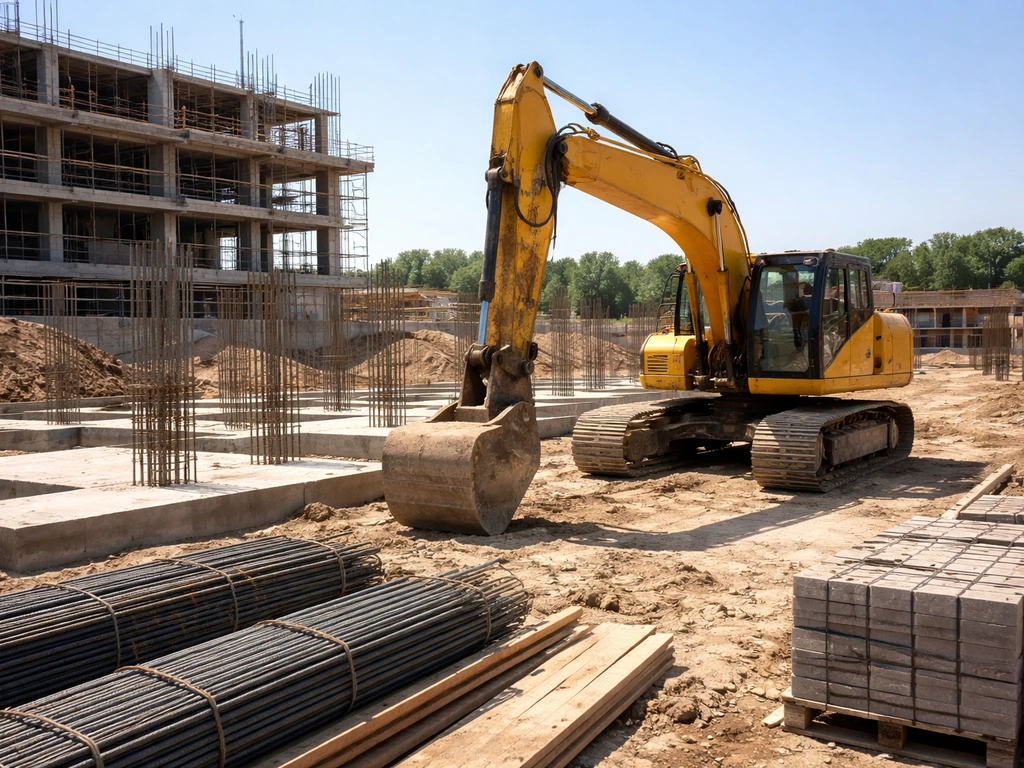
This is the core of the wealth. Polidano Brothers Limited, incorporated in Malta in July 1987, has been the vehicle for major construction and civil engineering work on the island for nearly four decades. Landmark infrastructure projects, including airport-related work, represent the type of high-value government and commercial contracts that generate both substantial revenues and lasting asset value. Malta's sustained construction boom over the past decade, driven by tourism infrastructure, residential development, and commercial property, has been particularly favorable to established contractors with the capacity to take on large projects.
Property and real estate holdings
The €11 million property disposal in 2022 (used to part-fund the tax settlement) gives a concrete data point for the kind of individual assets the group holds. A business that can sell one property for €11 million as a liquidity measure almost certainly holds multiple properties of similar or greater value across its portfolio. Times of Malta and WhosWho.mt have also reported on land and site enforcement actions involving Polidano-owned or controlled properties, suggesting a wide geographic footprint of holdings across Malta.
Hospitality and leisure

The company announcement on the Malta Stock Exchange confirms directorships in companies operating two of Malta's major hospitality properties. ICIJ’s Offshore Leaks Database entry for POLIDANO BROTHERS LIMITED lists “Paul Polidano” as a director in the record. This is a meaningful wealth driver: Malta's hospitality sector has seen strong revenue growth tied to record tourist numbers in the early-to-mid 2020s, and hotel asset values on the island have risen accordingly. Polidano Group's own site describes diversification into property, hospitality, and leisure as part of its strategic direction.
What is not clearly documented
- Offshore holdings: The ICIJ Offshore Leaks Database includes a node for Polidano Brothers Limited, though the director listed is Paul Polidano. This suggests corporate structures exist beyond the main Maltese company, but the scale of any offshore assets cannot be confirmed from public records.
- Personal investment portfolio: No public information exists on personal shareholdings, liquid assets, or other private investments outside the group.
- Exact revenue figures: Polidano Group does not publish annual accounts in a publicly accessible format, so revenue-based valuation estimates remain approximate.
Where these numbers come from and how to verify them
If you want to do your own verification or check for updates, here are the most reliable sources to work from, ranked by credibility: You can also use the ICIJ Offshore Leaks Database search interface to check whether Polidano-related entities appear across offshore-leak datasets.
- Times of Malta and Malta Independent: The two most established Maltese English-language newspapers have reported directly on Polidano's tax settlement, land enforcement actions, and business activity. These are the most reliable sources for specific verified figures.
- TVM News (Malta's national broadcaster): Confirmed the €20 million tax arrears payment in June 2022 with direct reporting.
- Malta company registry (MFSA): Polidano Brothers Limited and related entities are registered in Malta. Company filings at the Malta Financial Services Authority registry can confirm directorship changes, share structures, and (where filed) annual accounts.
- ICIJ Offshore Leaks Database: Useful for checking corporate structure signals, though it requires careful reading since it lists directors generically and does not quantify offshore assets.
- Malta Parliament and government PDFs: Useful for legal and regulatory context, though not for financial figures specifically.
- Rich-list blogs and celebrity net-worth aggregator sites: Treat with significant skepticism. The $1 billion figure from Topmost10.com (2019) is the best example of an uncorroborated estimate presented as fact. These sites rarely disclose methodology.
To update the estimate yourself, watch for: new major contract awards to Polidano Group, any court judgments that result in financial penalties or asset disposals, changes in Malta's property market values (which directly affect the portfolio), and any new regulatory or legal disclosures that put specific asset or liability values on the record.
What could move the number significantly
A net worth estimate for a private business owner in construction and property is not stable. These are the main drivers that could push it up or down meaningfully:
- Malta property market performance: A significant correction in Maltese real estate values (which have run hot for over a decade) would directly reduce the portfolio valuation. Conversely, continued appreciation pushes the estimate higher.
- Legal outcomes: The 2022 arrest on money-laundering charges and ongoing litigation involving excavation and land use are live contingencies. Adverse court rulings or additional penalties could represent material wealth destruction. Favorable resolutions remove the discount applied in the conservative estimate.
- Construction contract pipeline: Large public infrastructure contracts in Malta are periodically awarded. Winning or losing major tenders can shift annual revenue substantially, affecting the business valuation multiple.
- Hospitality sector performance: Tourist arrivals, occupancy rates, and hotel asset values are tied to broader Mediterranean tourism trends. A strong season or a high-value hotel sale would both be upward signals.
- Regulatory changes in Malta: Changes to planning, environmental enforcement, or tax policy could affect operating margins and asset values across the group.
- Business succession or restructuring: Polidano Group is described as family-owned. Any generational transfer of control, partial sale, or structural change could crystallize a verifiable value for portions of the business.
The timing of any meaningful estimate update would most likely follow a significant legal judgment, a major property transaction entering the public record, or a substantial contract announcement. Absent those triggers, the central estimate of €600–700 million is a reasonable working figure for 2026, but revisit it if any of the above events occur.
How this compares to other Charles figures in this space
For readers exploring net worth profiles across other prominent Charles figures, it is worth noting that the methodology challenge here is not unique. Private business owners like Charles Polidano are consistently harder to pin down than publicly listed company executives or salaried athletes, because there are no mandatory financial disclosures. By contrast, figures like Charles Piutau (whose wealth is largely tied to verifiable rugby contracts) or Charles Pol (television-linked earnings) benefit from more transparent income structures. If you are comparing similar net-worth profiles beyond construction, see also the Charles Pol net worth angle, since television-linked earnings tend to be more trackable than private business revenue. If you are specifically searching for Charles Piutau net worth, the same transparency gap does not apply because his earnings are tied more directly to rugby contracts. Charles Poliquin's wealth, built through fitness education and licensing, similarly had cleaner revenue lines. Polidano's construction and property base is large but opaque, which is why the range on his estimate is wider than you would typically see for a comparably wealthy person in a different industry.
FAQ
Why can’t his net worth be pinned to a single confirmed number from public records?
For Polidano Group, there are no regularly published audited accounts to translate directly into “net worth.” A practical substitute is to triangulate: (1) publicly reported tax and legal payouts, (2) documented major transactions like land or property disposals, (3) contract awards you can corroborate in reporting, and (4) company/directorship disclosures tied to hospitality operators. If any one of these signals updates materially, it is usually a better trigger than random website net-worth reposts.
Is the €600–700 million estimate a one-time number, or something that should be updated?
The €600–700 million figure is best treated as a “working central estimate,” not a fixed valuation. In private groups, estimates can swing when (a) property market prices change, (b) asset sales happen, (c) liabilities emerge from litigation or regulatory actions, or (d) contract margins differ from assumptions. That is why the article emphasizes a range and why it suggests revisiting after a major public trigger.
How should I interpret the reported tax settlement when estimating total wealth?
A common mistake is to equate “tax settlement” with “total money.” The way to use that data point is as a constraint on scale, then connect it to likely sources of liquidity (cash reserves, refinancing, or selling assets). In this case, the mention of an accompanying property sale gives an additional clue about how liquidity was raised, which helps narrow the plausibility of the central estimate.
How can I be sure I am looking at the right Charles Polidano and not a different person?
Because “Charles Polidano” appears to refer to multiple individuals, do not use the first name hit in search results. Cross-check that the person you are evaluating is the construction magnate associated with Polidano Group, referred to locally as “iċ-Ċaqnu,” and tied to the hospitality and property business disclosures discussed in the article. If the identity does not match those business links, any net-worth figure you see is likely for someone else.
What tends to move a private construction and property owner’s net worth up or down the fastest?
Yes. When a private company owns real estate and hospitality assets, the direction of change matters. Rising hotel values and stronger tourist demand can lift asset values even if profits are not fully public. Conversely, litigation, fines, or forced disposals can quickly reduce net worth. The best self-check is to look for new public events that would change either the asset side (transactions, valuation signals) or the liability side (judgments, penalties, settlements).
If new news comes out, what should I treat as high impact for updating the estimate?
If new information only partially overlaps with the current assumptions, you may need to adjust the components rather than replace the whole estimate. For example, a new contract award may increase expected earnings but not instantly increase asset value, whereas a court judgment with a penalty or an asset sale directly changes net worth mechanics. A quick approach is to treat “asset-changing” news (sales, judgments) as higher priority than “revenue-changing” news (announced contracts).
How can I tell whether a net-worth claim for Charles Polidano is reliable or just copied online?
Online “net worth” aggregators often recycle earlier numbers without showing how they estimated private assets or liabilities. Because audited accounts are not available, credible updates usually rely on verifiable events already reflected in reporting or public records, such as documented transactions, confirmed legal outcomes, or clearly identified corporate links. When an estimate has no traceable method, it is best treated as low-confidence background noise.
Why isn’t the company size the same thing as his personal net worth?
The estimate described here is intended for the private individual, not the company valuation alone. Even for the same family or group, net worth depends on what portion is personally held versus controlled through entities, plus the deduction for known liabilities and legal contingencies. If you only look at enterprise size or revenue signals, you will likely overstate the personal net worth because not all value accrues directly to the individual as spendable equity.
How do hospitality-related factors affect the net worth estimate compared with construction and property alone?
Yes, hospitality asset values can be disproportionately sensitive to tourism cycles and refinancing conditions. If hospitality operators experience occupancy drops, regulatory changes, or cap-rate shifts, market values can fall faster than construction-based asset values. That means the hospitality-linked portion should be updated when there are credible signals about performance or when any hospitality ownership and valuation disclosures become public.