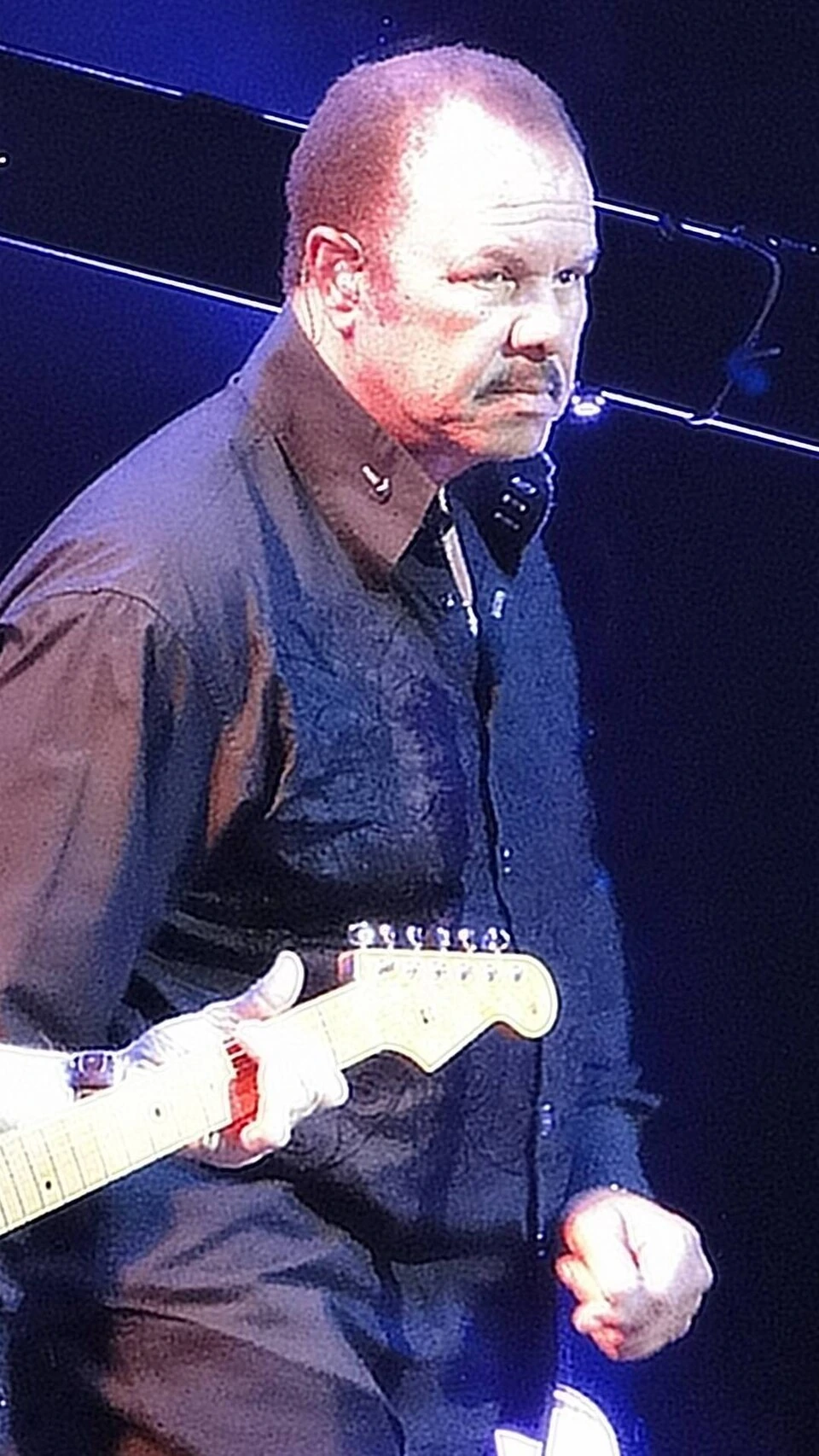
First, confirm which Sonny Charles you mean
If you searched "Sonny Charles net worth," the person you almost certainly have in mind is Sonny Charles Hemphill, born September 4, 1940, in Blytheville, Arkansas. He is best known as the lead vocalist for the R&B group Checkmates, Ltd. and as the voice behind the 1969 Phil Spector-produced hit "Black Pearl," released on A&M Records.) That single was originally credited to Checkmates, Ltd. before being relabeled as "The Checkmates, Ltd. featuring Sonny Charles," giving him his clearest individual name recognition in music history. He later toured with the Steve Miller Band, reportedly from around 2008 to 2012. There is no widely documented businessperson, athlete, or politician named Sonny Charles who would compete with this search intent, so this article focuses entirely on the musician.
Quick answer: the estimate and the realistic range
Sonny Charles's net worth is estimated at approximately $500,000 to $1.5 million as of April 2026. The midpoint most often cited in music-industry wealth trackers sits around $1 million, but that figure carries meaningful uncertainty. He is not a mega-star whose financials show up in SEC filings or major real estate databases, which means any number in this range should be treated as a reasoned estimate rather than a verified figure. The wide range reflects the difference between a scenario where his royalty income has been well-managed over decades and one where touring and recording income has been modest and not significantly supplemented by investments.
How the estimate is calculated
Net worth estimates for legacy R&B performers like Sonny Charles are built from several overlapping signals, not a single data source. Because he has not made disclosures through public company filings, a trust, or political office, researchers have to triangulate. The methodology works roughly like this: start with documented career earnings (recording contracts, known touring periods, residency engagements), add estimated royalty streams from catalog ownership or licensing, subtract reasonable estimates for living expenses and taxes over time, and layer in any publicly traceable asset activity like property records. The result is a range, not a precise dollar figure.
For Sonny Charles specifically, two career phases provide the clearest income anchors. First, the Checkmates, Ltd. years through the late 1960s and early 1970s, when the group held contracted residency engagements in Las Vegas and Lake Tahoe, which were steady, well-paying gigs for R&B acts of that era. Second, his tenure touring with the Steve Miller Band from roughly 2008 to 2012, which would have generated touring income at a level consistent with a supporting role in a major legacy rock act. Neither income stream comes with publicly filed dollar amounts, so estimates are approximations based on industry norms for those contexts.
Income breakdown: where the money came from
Recording and royalties

"Black Pearl" is the cornerstone of Sonny Charles's catalog value. Shazam’s track entry for “Black Pearl” links the song to the Sonny Charles & The Checkmates, Ltd. artist credit, which can help confirm editorial context for the correct recording and credits. Produced by Phil Spector and released in 1969, it was a genuine chart hit, which means it has generated performance royalties for decades through radio airplay, streaming, and licensing. The key question for any royalty estimate is who owns the underlying publishing rights. If Charles retained or later reacquired a share of the publishing, that stream would be more valuable. If he was signed under a standard early-era deal where the label or producer held the publishing, his royalty income would be more modest, likely limited to performer royalties rather than songwriter or publisher shares. Without a public rights disclosure, the royalty picture is genuinely unclear, but even a small annual royalty stream from a song with decades of catalog life adds up.
The Las Vegas and Lake Tahoe residency engagements for Checkmates, Ltd. in the late 1960s and early 1970s were among the more lucrative regular gigs available to R&B acts at the time. Vegas residencies paid reliably and often included accommodations and per diems, allowing performers to save more of their base pay than touring acts typically could. Exact contract values aren't public, but for a group with a top-40 hit and a Spector production behind them, these would have been solid mid-tier engagements. The Steve Miller Band touring stint from 2008 to 2012 is the most recent documented live income source, and supporting roles on arena or amphitheater tours for a legacy act of that scale typically pay session or touring musician rates, which can range widely depending on contract structure.
Estimated income summary
| Income Source | Estimated Period | Notes |
|---|
| Recording / "Black Pearl" royalties | 1969 to present | Ongoing; exact share of publishing unclear |
| Checkmates, Ltd. Vegas/Tahoe residencies | Late 1960s to early 1970s | Contracted engagements; amounts not public |
| Steve Miller Band touring income | ~2008 to 2012 | Supporting role; touring musician rates |
| Other live performance / legacy gigs | Various, post-2012 | Sporadic; no documented major contracts |
Assets and the broader financial picture

There is no publicly available real estate record, business registration, or investment disclosure tied specifically to Sonny Charles that would let us paint a detailed asset picture. For a performer of his generation and profile, the most common asset base would be a primary residence, possibly acquired during peak earning years, and whatever music catalog rights he controls. Legacy acts from the 1960s and 1970s have seen catalog valuations rise significantly in the streaming era, which could mean the royalty-linked portion of his net worth is higher today than it would have been ten years ago, assuming he held onto rights. But that assumption is not confirmed. If rights were signed away under early recording contracts, as was common for that era, the catalog asset piece shrinks considerably.
It is also worth noting that the financial profile here is quite different from performers who built parallel business ventures or made high-profile investments. There is no documented record of Sonny Charles owning a restaurant chain, a record label, or a significant real estate portfolio the way some peers leveraged their name recognition into business assets. This is not unusual for performers of his specific tier and era. His wealth profile appears to be primarily musician-driven rather than entrepreneur-driven, which is actually helpful for estimation purposes because it narrows the variables.
What we can verify today vs. what's genuinely uncertain
Here is an honest breakdown of what is documented versus what is estimated. It matters because some net worth sites present a single number with false confidence, and you deserve to know which parts of this estimate are solid.
| Data Point | Status | Why It Matters |
|---|
| Birth name and date: Charles Hemphill, Sept. 4, 1940 | Verified (Wikipedia, BlackPast.org, A&M Records) | Confirms identity; no confusion with other public figures |
| Lead vocalist of Checkmates, Ltd. | Verified (multiple documented sources) | Core career anchor for earnings estimate |
| "Black Pearl" 1969 hit on A&M Records | Verified (A&M Records artist page, Wikipedia) | Establishes royalty-generating catalog asset |
| Vegas/Tahoe residency engagements | Verified as occurring (BlackPast.org) | Estimated income level based on era norms |
| Steve Miller Band touring 2008-2012 | Documented (Wikipedia) | Most recent confirmed major income source |
| Royalty ownership / publishing share | Unverified | Critical unknown; could shift estimate significantly |
| Real estate or investment assets | Unverified | No public records found |
| Overall net worth figure | Estimated: $500K to $1.5M range | Not confirmed by any public filing |
When you see a site list Sonny Charles's net worth as exactly "$1 million" or "$2 million" without any methodology note, treat that as a rounded estimate built on the same incomplete data, not a confirmed figure. The honest answer is that the range of $500,000 to $1.5 million reflects what the documented career earnings and typical asset accumulation patterns for legacy performers of his profile would suggest. This is similar to the methodology applied when researching figures like Charles Smith's net worth, where career earnings and catalog assets are triangulated in the absence of public financial disclosures.
How to check or update this estimate yourself
Net worth estimates for legacy musicians like Sonny Charles can shift if new information surfaces. Here is a practical checklist for staying current and evaluating what you find online.
- Check property records: County assessor and recorder websites in Arkansas and Nevada (where he performed extensively) are free to search and can surface real estate holdings tied to his legal name, Charles Hemphill.
- Search ASCAP and BMI databases: Both performing rights organizations have public artist lookup tools. Finding Sonny Charles or Charles Hemphill registered there confirms active royalty collection, which supports the higher end of the net worth range.
- Monitor music licensing news: If "Black Pearl" gets placed in a major film, TV show, or ad campaign, that licensing deal increases catalog value and royalty income. Google Alerts for "Black Pearl" and "Checkmates" will catch this.
- Look for touring or performance announcements: New live bookings, especially festival appearances or nostalgia tours, indicate active income and updated earnings potential.
- Watch for estate or legal proceedings: Probate filings and court records are publicly searchable and often surface asset data that never appears elsewhere.
- Evaluate any net worth site critically: Sites that list exact figures with no sourcing, no range, and no methodology note are aggregating guesses, not data. Prefer sources that show their work, the same standard applied to profiles like Charles Sophy's net worth or Charles Skinner's net worth, where methodology transparency makes the difference between useful and misleading estimates.
What could push the number up or down
A few specific events would cause this estimate to move meaningfully. On the upside: a successful catalog sale or licensing deal for "Black Pearl" (catalog valuations for 1960s R&B hits have been strong in recent years), a new touring or recording deal, or the discovery of previously undocumented real estate or investment assets. On the downside: medical expenses or legal fees that draw down savings, evidence that publishing rights were signed away early and never reacquired, or simply the passage of time without new income sources for a performer now in his mid-80s.
The streaming era has actually been a quiet tailwind for legacy performers who retained even partial rights. Songs like "Black Pearl" accumulate small per-stream royalties across millions of plays on Spotify, Apple Music, and YouTube, and those add up over years even when individual payouts are tiny. This is a factor worth tracking, and it's one reason the higher end of the range isn't unreasonable even for an artist who hasn't released new material in decades. For comparison, consider how catalog income shapes estimates for other legacy figures in this space, such as the way royalty questions factor into Charles Sizemore's financial profile, where recurring income streams require the same kind of careful unpacking.
Bottom line: Sonny Charles (Charles Hemphill) has a documented career with real, lasting income-generating assets, particularly his connection to "Black Pearl" and decades of live performance work. The best-supported estimate for his net worth today sits in the $500,000 to $1.5 million range, with $1 million as a reasonable midpoint. The number is an estimate, not a fact, and the publishing rights question is the single variable most likely to move it in either direction if clearer information ever becomes public.