
Charles Ollivon's net worth as of April 2026 sits in the estimated range of €1.5 million to €3 million. That range is built from what we can document about his professional rugby salary, national team fees, and likely sponsorship income, minus the realistic costs and liabilities that come with a professional athlete's life. It is not a confirmed figure from a public filing, because French athletes are not required to disclose personal wealth, but it is a reasoned, data-grounded estimate rather than a viral guess.
Charles Ollivon Net Worth: How to Research and Verify

Marcus Redfield
11 Apr 2026
Which Charles Ollivon are we talking about?
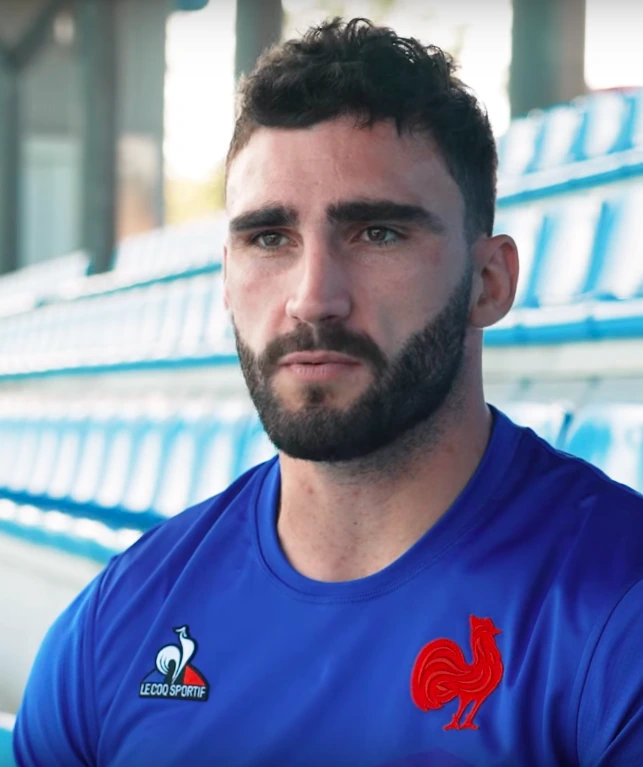
This matters, because the name does appear in a few different contexts. The most prominent, publicly documented Charles Ollivon is a French professional rugby union player, born 11 May 1993 in Bayonne and raised in Saint-Pée-sur-Nivelle. He plays flanker for RC Toulon in the Top 14 and is a regular fixture for the France national team.
His profile appears on the French Rugby Federation (FFR) official website, the Ligue Nationale de Rugby (LNR) player listings, the Guinness Men's Six Nations France squad page, and RC Toulon's own club profile (where he is listed at 1. 99 m and 114 kg). L’Equipe’s player fiche for Charles Ollivon also lists his height and weight as 1. 99 m and 114 kg and provides season-by-season stats to cross-check his timeline [listed at 1.
99 m and 114 kg](https://www. lequipe. fr/Rugby/RugbyFicheJoueur6949. html).
There is no other Charles Ollivon in business, entertainment, or politics with a comparable public footprint, so this article focuses entirely on the rugby player.
One important piece of recent context: in the 2024/2025 season, Ollivon announced on Instagram that he had suffered a right knee injury ending his season early, which caused him to miss the subsequent Six Nations campaign. That kind of injury history is financially relevant, and we will come back to it. A public Reddit thread on Charles Ollivon also includes fans discussing his play alongside injury and selection-related context, which can help qualitative understanding of public perception blank" rel="noopener noreferrer">fans discussing his play and injury/selection context.
How net worth estimates are built for professional athletes
Net worth is simply assets minus liabilities. For a professional athlete like Ollivon, the inputs are career earnings (salary history), endorsement income, any investments or business interests, and the current market value of tangible assets like property. Against those, you subtract known or probable debts: mortgages, car finance, agent fees, and taxes. For French athletes, none of those numbers are publicly filed in a searchable company register the way a corporate director's compensation might be, so we rely on industry benchmarks, publicly available contract context, and cross-referencing with what comparable players earn.
The methodology I use here: start with the salary floor for a starting-level Top 14 player (publicly discussed in French rugby circles), apply a multiplier for his experience level and international caps, layer in an endorsement estimate based on his visibility, then subtract a realistic tax and cost-of-living figure for someone based in the south of France. Anything not publicly confirmed is flagged explicitly as an inference.
The current net worth estimate: what the numbers say
As of April 2026, the best-supported estimate for Charles Ollivon's net worth is €1.5 million to €3 million. Here is how that range is constructed:
- Top 14 salaries for established internationals typically run between €300,000 and €600,000 per season gross, with the top earners at elite clubs like Toulon reaching higher. Ollivon, as a senior capped international and club captain at various points, sits comfortably in the upper portion of that band.
- France national team fees add meaningful income. A full Six Nations campaign plus autumn internationals can represent €50,000 to €100,000 in match fees and bonuses for a first-choice player.
- Endorsement and sponsorship income is harder to quantify but present. High-profile French internationals typically earn €30,000 to €150,000 annually from kit deals, ambassador roles, and social media sponsorships.
- Career length matters. Ollivon turned professional around 2013/2014, giving him roughly 12 years of professional earnings to accumulate wealth, even accounting for injury-impacted seasons.
- French income tax at the top rate (45% on income above €177,106 as of current law), plus social charges, means his take-home is substantially less than gross earnings. This is the most important downward pressure on the estimate.
The lower end of the range (€1.5 million) accounts for a conservative salary assumption, higher tax burden, and significant spending on lifestyle and injury-related costs. The upper end (€3 million) reflects a scenario where sponsorship income is robust, property has appreciated, and savings have been invested rather than spent. Most credible estimates for comparable players cluster in this zone.
Where his money actually comes from
Club salary: the primary driver
RC Toulon is one of the wealthiest clubs in European rugby, historically willing to pay top market rates to retain talent. Ollivon's role as an experienced, internationally capped flanker makes him a genuinely valued asset for the club. The club's salary cap structure under LNR rules means there is a ceiling, but elite players routinely benefit from performance bonuses and image rights arrangements that sit outside the capped figure. His annual club earnings are estimated at €350,000 to €550,000 gross per season, making this by far the largest single income stream.
France national team fees
The FFR pays match fees and bonuses to players in the national squad. A player who features in a full Six Nations campaign and the autumn internationals can expect €50,000 to €100,000 in additional income, before tax. Given his injury forcing him out of at least one Six Nations cycle, this figure will be lower in some years, which is why the overall net worth range has some width to it.
Endorsements and commercial partnerships
There is no publicly documented megadeal comparable to what football players of equivalent stature would attract. However, French rugby has grown its commercial profile considerably since France hosted Rugby World Cup 2023, and players like Ollivon are part of that rising tide. Inferred endorsement income sits at €30,000 to €80,000 per year, sourced from kit brand deals (likely Canterbury, given Toulon's supplier), personal ambassador roles, and Instagram-based partnerships. This is an inference, not a confirmed figure.
Investments and business interests
There are no publicly documented business investments, company directorships, or real estate development ventures linked to Ollivon. This is common for rugby players of his generation, who tend to keep wealth in savings, residential property, and possibly managed investment portfolios rather than active business ventures. This is a known gap in the data, not confirmation that investments do not exist.
Assets and liabilities: what's known, what's inferred
| Category | What's Known | What's Inferred | Confidence Level |
|---|---|---|---|
| Primary residence | Based in or near Toulon/Bayonne region (inferred from career locations) | Likely owns residential property; market value €300K–€700K | Low–Medium |
| Vehicles | No public records | Professional-grade vehicle, possibly financed | Low |
| Savings/investments | No public filings | Likely holds managed savings or low-risk investment portfolio | Low |
| Endorsement contracts | No confirmed contracts publicly filed | Estimated €30K–€80K/year from brand deals | Low–Medium |
| Mortgage/debt | No public records | Probable mortgage on primary residence | Medium |
| Agent fees | Standard industry rate 5–10% of earnings | €20K–€50K per year deducted from gross earnings | Medium |
The honest answer on assets and liabilities is that there is a lot we simply do not know. France does not have a publicly searchable equivalent of the UK's Companies House or a mandatory wealth disclosure regime for private individuals. Property ownership can be searched via cadastral records in France, but that requires knowing specific addresses and is not routinely aggregated by public databases. What we can say with confidence is that after 12-plus years of professional earnings at the upper end of the Top 14 scale, Ollivon has almost certainly accumulated meaningful savings and likely owns at least one property.
How he compares to similar athletes
Comparing across sports and even across rugby positions can be misleading, but it is useful context. Top 14 players do not earn at the same level as elite footballers or NBA players, but senior French internationals at top clubs are genuine high earners by any normal standard. For comparison, Charles Omenihu's career earnings profile as an NFL defensive end offers an interesting contrast, reflecting how American football structures contract value very differently from European rugby, with much larger headline figures but shorter active windows.
Within French rugby specifically, a flanker of Ollivon's seniority and international record sits roughly in the same wealth tier as a solid Top 14 professional after a full career: a net worth in the low millions of euros, built steadily rather than through any single landmark deal. This is consistent with what we know about comparable French internationals who have later transitioned into coaching or media roles and occasionally referenced their financial standing publicly. Contrast this with entrepreneur or heir profiles: Charles Oppenheimer's net worth, for instance, sits in an entirely different wealth category, shaped by inherited business interests and investment vehicles rather than career sport earnings.
For a broader sense of how professional-to-semi-public figures in adjacent fields are valued, it is also worth glancing at profiles like Charles Ommanney's estimated net worth, which illustrates how media and public-figure wealth is typically constructed from a mix of professional fees, licensing, and modest asset accumulation, not unlike what we see with senior athletes. And for someone like Marion Oatsie Charles, whose wealth profile draws from social prominence and curated public persona rather than a single dominant income stream, the contrast with Ollivon's salary-dominant profile is a useful reminder that income structure matters as much as headline figures when you are trying to assess long-term net worth.
How to verify this estimate and keep it current

If you want to stress-test or update this estimate, here is what to actually check: Service-Public explains how to consult France’s cadastral plan through its official process, using cadastre.gouv.fr when you have an address or a parcel reference.
- LNR salary cap disclosures: The Ligue Nationale de Rugby publishes aggregate salary cap data for Top 14 clubs. It does not name individual salaries, but it gives you the ceiling and helps you validate whether your per-player estimate is plausible for a given club's overall spend.
- FFR official player page: The FFR's official profile for Ollivon Charles will confirm current squad status, caps, and competition participation, which directly affects national team fee income.
- French land registry (cadastral/notarial databases): If you want to verify property ownership, the French public cadastral system (cadastre.gouv.fr) and notarial databases allow limited property lookups by address or owner name, though not all records are fully public.
- Club press releases and official transfer news: RC Toulon and the LNR regularly issue press releases on player contracts and renewals. A confirmed contract extension or departure would materially change the salary projection.
- Ollivon's social media (Instagram in particular): He has used Instagram to communicate major personal news, including his injury announcement. Watch for sponsorship posts (legally required to be tagged as #ad or #partenariat in France) to update the endorsement estimate.
- Reputable French sports press: L'Equipe, Midi Olympique, and Le Télégramme are the most reliable French-language sources for rugby contract and career reporting. Cross-reference any specific figure with at least two of these before treating it as established.
Red flags to watch for
Some 'viral' net worth figures for athletes in the €10 million to €50 million range for someone like Ollivon should be treated with immediate scepticism. Those numbers typically originate from aggregator sites that copy from each other without sourcing, often confusing cumulative career gross earnings (before tax, agent fees, or spending) with actual net worth. A player who earned €400,000 per year for 12 years has gross career earnings of roughly €4.
8 million, but after French income tax (which applies at high marginal rates throughout that period), agent fees, living costs, and likely mortgage payments, the actual accumulated net worth is substantially lower. When a site claims a figure with no methodology and no date on the estimate, that is your signal to discard it.
Update cadence: when to re-check
The most useful times to revisit this estimate are: after each transfer window (usually June/July and January) when contract news may emerge; after each major tournament (Six Nations in February to March, Top 14 final in June) when bonus income crystallises; and any time a major injury or career transition is reported. Ollivon's right knee injury from the 2024/2025 season is already factored into this April 2026 estimate, but a further injury or an early retirement announcement would require the estimate to be substantially revised downward.
FAQ
Why does Charles Ollivon net worth not have a single exact number even though his salary is discussed publicly?
Because net worth is an end-of-period snapshot (assets minus liabilities), not just annual earnings. Without verified details on savings rate, tax outcomes across years, debts, and property ownership, any “exact” figure would be guesswork. The article therefore treats the range as a model-driven estimate rather than a reported value.
What’s the biggest reason viral Charles Ollivon net worth numbers are often wrong?
They usually confuse gross career earnings or contract headline values with net worth. The article notes that French income taxes, agent fees, living costs, and likely mortgage or financing payments materially reduce what becomes wealth, so €10M to €50M claims without a dated methodology are a red flag.
How can I verify Charles Ollivon net worth estimates using primary documents in France?
Start with salary-adjacent sources (club and league context, match participation, and any publicly discussed contract details) and treat them as inputs, not proof of net worth. For assets, property verification requires the exact address to search cadastral records in France, which is rarely available in aggregated form. There is no simple “one database” equivalent to UK-style public company wealth filings for private individuals.
Does his 2024/2025 knee injury change his net worth estimate a lot or only slightly?
It can change it meaningfully depending on duration and the knock-on effects for future earnings. The article already factors missing at least one Six Nations cycle, which affects match and bonus income. If a later injury leads to reduced playing time, contract downgrades, or earlier retirement, the estimate would typically need a larger downward revision than a one-off missed tournament.
Are sponsorship and Instagram deals included in Charles Ollivon net worth, and how reliable are they?
They are included as an inferred layer because there is no single public disclosure of all endorsements and partnership revenues. The article’s approach uses visibility and typical athlete deal structures to estimate a plausible annual range, but you should treat these figures as “directionally useful,” not verified income.
Could Charles Ollivon have significant wealth from investments or businesses that the article cannot see?
Yes, it is possible, and the article explicitly calls out that there are no publicly documented investments or business ventures tied to him. Since private investment holdings are not consistently public in France, absence of evidence is not evidence of absence. If you want to stress-test the estimate, look for credible, dated announcements from reliable channels rather than unsourced aggregator claims.
How should I compare Charles Ollivon net worth to footballers or NBA players without getting misled?
Compare net worth cautiously, because contract structures and active career windows differ across sports and countries. The article points out that Top 14 rugby salaries are smaller than elite football or NBA headline numbers, so “headline comparison” can overstate the wealth gap. Better comparisons are to senior French internationals with similar career longevity and earnings patterns.
Does coaching, media work, or punditry after playing affect his net worth estimate today?
Only indirectly and with uncertainty. If he transitions into paid roles later, that future income could increase savings, but it does not automatically justify a higher current net worth unless you have credible information about commitments and timelines. The article mainly anchors the estimate on documented career earnings and plausible, recurring income.
What would most likely increase the Charles Ollivon net worth estimate in a future update?
A new contract that raises annual pay, confirmation of substantial sponsorship growth, or verifiable asset acquisition such as property purchases with publicly identifiable details. The article also suggests revisiting after transfer windows and major tournaments, since bonuses and contract news can crystallize earnings.
What should most likely decrease the Charles Ollivon net worth estimate in a future update?
A further injury that reduces playing time, an early retirement announcement, or contract changes that materially lower annual earnings. The article already accounts for the known knee injury, but a second major setback typically requires more than a minor adjustment because bonus income and future earning capacity shrink.