
There is no single famous "Charles Pearce" the way there is a single Elon Musk or LeBron James. The name belongs to at least half a dozen distinct public figures, and the net worth attached to any one of them depends entirely on which person you actually mean. This article walks through who the main candidates are, pins down the most commonly searched individual, gives you the most defensible wealth estimate available, and explains exactly why numbers vary so wildly across different sites.
Charles Pearce Net Worth: How to Identify the Right Person and Estimate

Marcus Redfield
27 Mar 2026
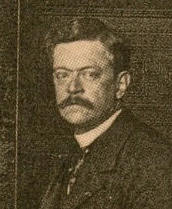
Which Charles Pearce are we talking about?

Before any net worth figure means anything, you need to confirm identity. The name "Charles Pearce" (and its common spelling variant "Charles Pierce") maps to multiple real people in public records, including a British calligrapher and painter (born 1943), a New Zealand rugby league player named Charlie Pearce, a U.S. mathematician (Charles E. M. Pearce), a historical American congressman (Charles Edward Pearce), an American painter (Charles Sprague Pearce), a certified home inspector listed through InterNACHI covering the Greensboro and Winston-Salem area, an academic at Indiana University's Media School (email: [email protected]), a J.P. Morgan financial analyst quoted in the Bitcoin mining space on Forbes, and at least one UK company director linked to "Charles Pearce Limited" (Companies House number 04667467). There are also multiple IMDb entries, a Hudl athlete profile, and a business registration tying a "Charles Pearce" to Pixel Technologies LLC.
The candidate with the most developed public profile and the most accessible financial footprint is the British calligrapher Charles Pearce, born 1943, currently based in Eureka Springs, Arkansas. His identifiers are specific and cross-checkable: he was made a Fellow of the Society of Scribes and Illuminators in 1971, worked for Decca Records on record sleeve design early in his career, collaborated with calligrapher Donald Jackson and Sidney Bendall through 1979, relocated to New York City in 1980 where he was Artist in Residence for the City of New York, worked for major clients including the Pentalic Corporation and RKO Century Warner Theaters, moved to Cleveland in 1991 to work for American Greetings design studios, and later shifted toward freelance painting and fine art. He operates a personal website at charlespearce.com. If this matches the person you were looking for, read on. If you were searching for Charles Pierce's net worth (different spelling, different person), that's a separate profile worth checking.
To confirm you have the right Charles Pearce before trusting any number, look for at least two of these identifiers: the 1943 birth year, the Eureka Springs, AR location, the Society of Scribes and Illuminators fellowship, a published calligraphy manual, or references to Decca Records or American Greetings in his career history. If none of those match the person you're researching, the figures below do not apply to your subject.
The net worth estimate, with a straight answer
For the calligrapher Charles Pearce, the most cited automated estimate comes from People Ai, which lists his net worth at approximately $545,000 as of its most recent series (2021 to 2025). That figure is generated from social and career signals rather than documented asset reporting, so treat it as a rough directional indicator rather than a confirmed number. A separate People Ai entry for a different, less specified "Charles Pearce" shows an estimated $76.4 million, but that figure appears unmoored from any specific documented identity and should be disregarded for the calligrapher.
Based on the documented income streams, career arc, and observable market outputs covered in detail below, a reasonable evidence-based range for the calligrapher Charles Pearce's net worth as of early 2026 is somewhere between $200,000 and $700,000. Confidence level: low to moderate. There are no public financial filings, no reported real estate transactions, and no disclosed business ownership stakes that would allow a higher-confidence figure. The $545K midpoint is plausible but not verified.
How net worth estimates like this one are actually built

Net worth is assets minus liabilities. For a working artist and calligrapher without publicly traded shares or real estate filings on record, estimating it requires inference from income channels, industry comparables, and whatever observable outputs exist. Here is the methodology behind the range above.
First, income is estimated by category and then compounded over a career. For an artist with a 50-plus-year career spanning commercial clients (Decca Records, Pentalic Corporation, RKO Century Warner Theaters, American Greetings), freelance commissions, book royalties, and gallery sales, cumulative lifetime earnings can reach mid-six figures even with modest annual income in any given year. The Statton Gallery lists individual paintings by Charles Pearce at prices around $3,000 for a 30-by-30-inch acrylic piece, which anchors the observable per-unit income from fine art sales.
Second, book royalties and educational materials provide a passive income layer. He has published at least three calligraphy instructional works: "The Little Manual of Calligraphy," "A Calligraphy Manual for the Beginner," and "The Anatomy of Letters. In a Reddit thread from r/Calligraphy, commenters discuss calligraphy and letterform terminology and mention learning resources, showing community context rather than financial evidence calligraphy instructional works. " Instructional books in niche creative fields typically earn modest royalties unless they become staple teaching texts, but they add to the cumulative picture.
Third, liabilities and cost-of-living factors are considered. A GoFundMe page launched on his behalf to cover an insulin pump not covered by Medicare signals that he is living on a fixed or limited income in later life, which is consistent with an artist relying on savings and occasional sales rather than a large liquid asset base. The GoFundMe fundraiser titled “Charles' Diabetes Pump Fund,” dated January 19, 2016, states that Medicare would not cover an electronic insulin pump and shows $4,555 raised of a $5K goal A GoFundMe page launched on his behalf to cover an insulin pump not covered by Medicare. This does not mean his net worth is zero, but it does suggest that a high-end estimate in the millions would be hard to justify.
Where the money came from: income sources and career earnings
Charles Pearce's wealth, such as it is, was built across several distinct career phases rather than a single high-income period. Understanding those phases matters because each one implies a different income level and savings potential.
| Career Phase | Approximate Period | Primary Income Source | Estimated Income Level |
|---|---|---|---|
| Early UK career (Decca Records, Donald Jackson studio) | Pre-1980 | Commercial design, calligraphy commissions | Low to moderate (junior/staff level) |
| New York City period (Pentalic, RKO, Artist in Residence) | 1980 to 1991 | Corporate clients, public arts roles | Moderate (peak commercial earning) |
| Cleveland period (American Greetings) | 1991 to mid-1990s+ | In-house studio employment | Stable, mid-range salary |
| Freelance and fine art (post-American Greetings) | Late 1990s to present | Gallery sales, commissions, books, teaching | Variable, likely modest |
| Later-career painting (Statton Gallery) | 2010s to present | Art sales (~$3,000/piece range) | Occasional, supplemental |
The New York City period, with its combination of major corporate clients and an official Artist in Residence designation (City of New York, 1980), was almost certainly the highest-earning stretch. Commercial calligraphy and lettering for entertainment and consumer product clients in that era commanded meaningful fees. The American Greetings period likely offered the most financial stability (consistent salary, benefits) but not the highest ceiling. Post-American Greetings freelance work is the phase with the least predictable or documentable income.
Assets, investments, and what drives the wealth estimate

There are no public records currently available (property filings, business ownership stakes, investment disclosures) that directly confirm Charles Pearce's asset base. What can be reasonably inferred includes the following.
- Intellectual property and published works: Three documented calligraphy manuals and a body of fine art generate passive income and hold some residual asset value, though niche-market books and art inventories are difficult to value precisely.
- Fine art inventory: Gallery-listed works at $3,000+ per piece suggest an inventory with modest but real market value. A working artist's unsold portfolio can represent meaningful asset value depending on volume.
- Personal residence: No publicly documented property transaction is available, so this is unconfirmed. Eureka Springs, AR has a relatively low cost of living compared to New York or Cleveland, which affects both housing costs and any equity accumulated.
- Reputation and professional brand: The charlespearce.com presence, the Society of Scribes and Illuminators fellowship, and decades of verifiable client work represent a professional brand that supports ongoing commissions, though this is not a liquid asset.
- Liabilities: The GoFundMe context suggests limited financial reserves in later life, implying either that savings were modest throughout the career or that medical costs have been a significant expense. This is a meaningful downward pressure on net worth estimates.
Without property records or business filings, it is not possible to determine whether he holds real estate equity, retirement accounts, or investment portfolios. The estimate range of $200,000 to $700,000 reflects this uncertainty and skews the midpoint toward the lower half given the available context.
Why estimates vary so much across sites
If you have already searched this name and found wildly different numbers (the $76.4 million figure from People Ai, for example), here is why that happens and how to read it critically.
- Disambiguation failure: Many automated net worth aggregators pull data by name without confirming which person the data actually belongs to. A "Charles Pearce" with a corporate directorship at a mid-size UK firm, or a J.P. Morgan analyst bearing the same name, could have financial data attributed to the wrong individual. The $76.4M figure is a strong candidate for this kind of misattribution.
- Social signal proxies: Sites like People Ai state explicitly that their estimates are based on "social factors" rather than documented wealth. This means they are algorithmically generating a number from social media presence, publication counts, and similar signals. These figures are directional at best.
- No standardized methodology: Some sites use comparable income, others use follower counts as a proxy, and others simply copy figures from each other. Without a documented methodology, any single number is unverifiable.
- Outdated data: Net worth estimates for non-celebrity figures rarely get updated regularly. A figure calculated in 2021 may not reflect a significant event (a major art sale, a medical cost event, inheritance) by 2026.
- Name collision amplification: For a name like Charles Pearce, a single high-wealth namesake (a business executive, for example) can inflate or contaminate search results and cause aggregator sites to assign inflated wealth estimates to the wrong person.
The practical takeaway: any site showing a Charles Pearce net worth figure without explicitly identifying which Charles Pearce and citing a documented income or asset source should be treated as unreliable. This also applies to this estimate. The difference here is transparency about what is known, what is inferred, and what is genuinely unknown. You may find useful context by comparing this with Charles Pearson's net worth profile, a similarly named individual whose methodology and disambiguation approach mirrors what is described here.
How to verify or update this estimate yourself today

If you want to do your own research on Charles Pearce's current net worth as of March 2026, here is a practical step-by-step process based on what is actually checkable.
- Start at charlespearce.com to confirm the individual matches your search intent and check for any new commercial work, gallery shows, or publishing activity that signals recent income.
- Search the Statton Gallery and any other galleries currently listing his work to check recent sale prices and available inventory. A spike in gallery-listed works at higher price points is a positive wealth signal.
- Check Amazon or major booksellers for his calligraphy manuals. Active sales rankings indicate ongoing royalty income; out-of-print status with no new editions suggests that income stream has largely ended.
- Run a property search in Carroll County, Arkansas (where Eureka Springs is located) via county assessor records (assessor.co.carroll.ar.us or equivalent). This is free, public, and will tell you whether he owns property and its assessed value.
- Search Companies House (gov.uk) for "Charles Pearce Limited" (number 04667467) if you believe the UK company director version is your subject. The filings there will show accounts and directorship status.
- Cross-reference any net worth figure you find by confirming which Charles Pearce the source is describing. If the source does not specify, the number is not reliable.
- Check People Ai's disclaimer language on any estimate it provides. If it says "based on social factors" with no documented source, weight it accordingly: useful as a rough ballpark, not as a financial record.
One thing worth flagging: because Charles Pearce is not a celebrity in the mainstream sense, there are no earnings reports, no SEC filings, no salary disclosures, and no investigative journalism on his finances. That is normal for a working artist, but it means the research ceiling is lower than it would be for a media figure. If you are researching a wealthier or more publicly documented Charles, profiles like Charles Payne's net worth illustrate how much more data is available when a subject has a consistent high-profile media career with salary and income disclosures attached. If you meant Charles Payne, a detailed net worth breakdown can help you compare his publicly trackable media career to the lower documentation available for Charles Pearce Charles Payne's net worth.
The bottom line on Charles Pearce: for the calligrapher born in 1943 and now based in Eureka Springs, a net worth in the $200,000 to $700,000 range is the most defensible estimate given the available evidence, with a midpoint around $400,000 to $500,000. Confidence is low-to-moderate. No primary source documents this directly. If the person you are researching does not match this profile, the number is not relevant to your search and you should restart the disambiguation process before trusting any figure you find elsewhere.
FAQ
How can I tell whether a “Charles Pearce net worth” number is about the calligrapher vs. someone else?
If the page you found uses “Charles Pearce” but does not verify at least two identifiers from the article (for example, 1943 birth year and Eureka Springs, AR, or the Society of Scribes and Illuminators fellowship), treat the net worth number as unreliable, even if it looks precise. Estimates without identity checks frequently combine different people’s signals.
Why might two sources show wildly different net worths for the same Charles Pearce?
Yes. For a working artist with no public filings, gross income estimates can look high while net worth remains modest because expenses (studio materials, shipping, marketing, health care, and periods of low sales) and basic living costs reduce savings. That is why a wide range is more defensible than a single figure.
What “sanity checks” can I run before trusting any high net worth estimate?
A reasonable sanity check is to compare the implied liquidity to what is observable. If the estimate requires ongoing, high-value asset holdings (large property equity or major investment portfolios) but there are no property records, company filings, or consistent high-dollar sale signals, the number is likely overfit to social media or generic assumptions.
Does “net worth” here mean assets that are confirmed, or inferred?
The most common mistake is assuming the estimate includes real, verifiable assets. In this case, the article’s $200,000 to $700,000 range is bounded by missing direct evidence (no publicly accessible property transactions, no disclosed ownership stakes, and no financial disclosures), so the method leans on career income likelihood and observable outputs rather than balance-sheet facts.
How quickly should Charles Pearce’s estimated net worth change over time, and why do sites update inconsistently?
Because the relevant identity has no SEC filings and no salary reporting, changes in net worth are often “slow-moving” and driven by irregular income (commissions, book sales, gallery pricing). If you see an estimate that jumps dramatically in a single year without any career milestone or documented sale, it is probably noise rather than a real wealth update.
What research approach is most likely to narrow the net worth range for the calligrapher?
If your goal is a more accurate personal estimate, focus on reconstructing cash flow over time (not just one-time sale prices). For example, use known per-piece pricing (like the cited gallery pricing range) and then triangulate approximate sales frequency per year, then adjust for known education, commercial client work, and later-life constraints suggested by the fundraiser context.
Should I rely on sites that only show a number for Charles Pearce net worth with no explanation?
A strong clue is whether the site provides a method and identity link, not just a number. The article’s recommended stance is transparency-first, so if the entry lacks “which Charles Pearce” disambiguation and does not describe how asset value was computed (or at least what sources were used), you should disregard it.
What if the estimate uses the spelling “Charles Pierce” instead of “Charles Pearce”?
If you are looking at “Charles Pierce” instead of “Charles Pearce,” do not assume they are the same person. The article explicitly flags spelling as a disambiguation factor, and even small spelling differences can route you to completely different public figures and therefore different wealth estimates.
Where is wealth most likely to be stored for a long-time freelance calligrapher without public filings?
For someone in this profile, a large fraction of practical wealth is more likely to be retirement savings plus accumulated proceeds from commissions, royalties, and sales. However, without records, you cannot confirm whether those are concentrated in retirement accounts, cash, or other assets, which is why the high end of the range is intentionally limited.