Which Charles Krypell are we talking about?
Charles Krypell is a New York-based fine jewelry designer and entrepreneur, not a celebrity, athlete, or politician. He's the founder of Charles Krypell Fine Jewelry, a business he launched in 1976 that has grown from a design studio into a vertically integrated operation combining original design, in-house manufacturing, and retail. If you landed here looking for a different Charles, this is not the right profile: this is specifically about the jewelry industry figure who grew up in Coney Island, trained as a sculptor at Pratt Institute in Brooklyn, and built a family-run luxury brand headquartered on Long Island. His wife Debbie, and children Evan, Tyler, and Brian Krypell are all active in the business today, making this a closely held, family-controlled enterprise rather than a publicly traded company.
The net worth estimate right now
Charles Krypell does not appear on any Forbes billionaires or centimillionaires list, and no credible public filing pins an exact personal net worth to his name. Based on everything that can be pieced together from business scale signals, revenue indicators, and industry context, a reasonable estimated range for Charles Krypell's net worth as of April 2026 is approximately $5 million to $20 million. The most defensible midpoint estimate sits around $10 million to $12 million.
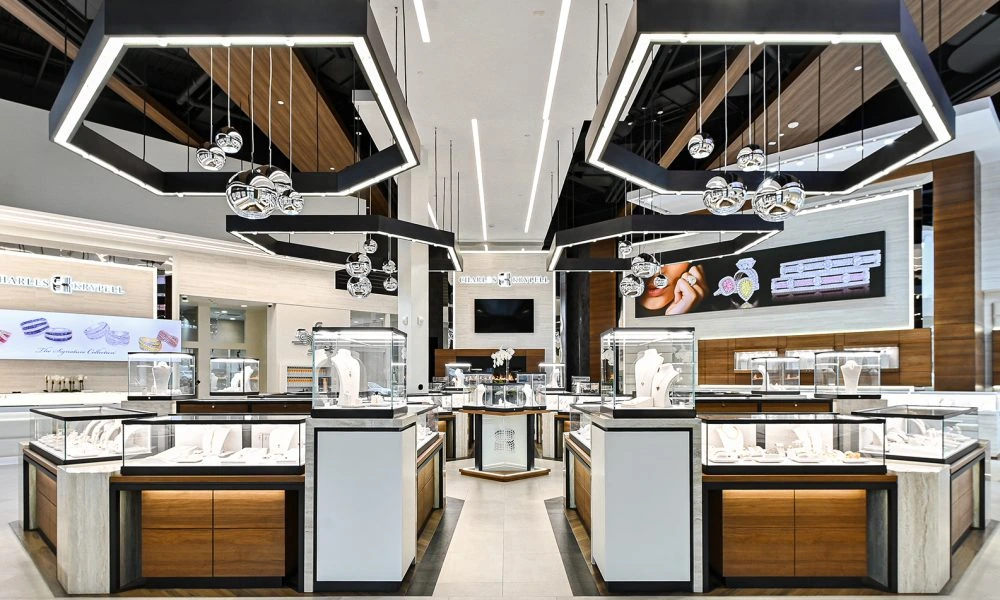
That range accounts for business equity in a privately held jewelry brand with nearly 50 years of operation, a flagship retail showroom spanning roughly 10,000 square feet total (with about 5,000 square feet of showroom floor) in Greenvale, New York, and a documented event-driven sales model that reportedly generated around $4 million in revenue during a single COVID-era travel season alone. This is not a confirmed figure.
It is a reasoned estimate based on public business signals, and it should be treated as a directional range rather than a certified number.
Where his money comes from

Krypell's career arc is unusually integrated for the jewelry world. He started as a sculptor, studied formally at Pratt Institute, and channeled that artistic training into jewelry design. From 1976 onward, he built what industry trade publication Rapaport described as a "trifecta": he designs the pieces, manufactures them, and sells directly through his own retail channel. That vertical structure means revenue does not get split across multiple middlemen the way it does for designers who license to third-party retailers. More margin stays in the business, and more of the business equity accrues to the family.
The income streams worth understanding here fall into a few distinct buckets. First is wholesale: Charles Krypell pieces are sold in fine jewelry stores across the country, a channel he has been building for decades. Second is retail: the flagship showroom at 25 Northern Blvd in Greenvale, NY is a destination-style operation. The Yahoo/Lifestyle feature reports that the flagship store at 25 Northern Boulevard in Greenvale opened Dec.
1 during COVID-era delays and describes it as a 5,000-square-foot store in a building owned by the Krypell family [the flagship showroom at 25 Northern Blvd in Greenvale, NY is a destination-style operation. ](https://www. yahoo. com/lifestyle/risky-business-independents-open-shops-040141297.
html). Third, and arguably the most telling revenue signal, is in-store events. Krypell has run up to 70 in-store events per year at partner retailers nationwide. A Centurion Jewelry news feature specifically referenced a "$4 million COVID-19 season on the road," which gives a concrete, if one-off, revenue data point tied to his personal-appearance and event sales model.
Combined, these streams feed into a private company that has been operating continuously since 1976 and shows no signs of contraction.
How the estimate is built
Estimating net worth for the owner of a private business requires a different approach than tracking a CEO's stock holdings or a celebrity's disclosed earnings. There is no SEC filing to pull, no public salary disclosure, and no stock price to multiply by shares owned. Instead, the methodology here relies on triangulating several signals. For context, Charles Krasne's wealth profile uses a similar triangulation approach for another privately held business owner, so the methodology is consistent across this site.
- Revenue signals: The $4 million single-season revenue reference from Centurion Jewelry's reporting establishes a floor for what the business can generate in a compressed period. Annualized event revenue, wholesale volume, and retail sales together likely push total business revenue well past that in a normal operating year.
- Business entity filings: Public records show multiple active corporate entities including Charles Krypell, Inc., Charles Krypell Fine Jewelry LLC, and the more recently filed Charles Krypell Brands, LLC (registered March 13, 2025 per BizProfile). Multiple entities can suggest either operational complexity, brand expansion, or both.
- PPP loan data: Federal PPP loan records list "CHARLES KRYPELL, INC." as a recipient, which provides a rough employee count and payroll scale signal. While the specific dollar bracket is tiered rather than exact, it confirms a business of meaningful operating size.
- Physical assets: The flagship showroom represents a substantial real estate and build-out investment. A 10,000 square foot commercial space in Nassau County, Long Island, whether leased or owned, carries significant asset or liability implications.
- NYC corporate tax records: The New York City BERS General Corporation Tax Allocation reports include references to Charles Krypell Inc across multiple years, confirming the entity has been active and tax-filing in NYC consistently.
- Owner's equity estimate: For a privately held business generating estimated annual revenue in the range of $5 million to $15 million, a standard valuation multiple of 1x to 3x revenue (common for specialty retail and design brands) suggests business equity in the range of $5 million to $45 million. Personal net worth is then a function of ownership stake, minus any debt or liabilities, plus personal assets outside the business.
What the wealth breakdown probably looks like

Because this is a family-held private business, asset and liability data is limited. But based on what is publicly available and standard structures for businesses of this type, here is a reasonable breakdown of where Krypell's wealth likely sits.
| Asset or Liability Category | Estimated Range | Confidence Level |
|---|
| Business equity (Charles Krypell, Inc. / LLC interests) | $4M – $15M | Low-Medium |
| Real estate (residential, Long Island) | $1M – $3M | Low |
| Inventory and intellectual property (design catalog, trademarks) | $500K – $2M | Low |
| Personal investments and retirement assets | $500K – $2M | Very Low |
| Business liabilities (loans, lease obligations, operational debt) | -$500K – -$3M | Low |
| Net personal wealth estimate (midpoint) | ~$10M – $12M | Estimated |
The legal history is also worth noting. A 2010 federal case titled Marshall Asnen, Inc. v. Charles Krypell, Inc. appears in Justia's court records, meaning the business entity has faced litigation at least once. A Justia court-record entry titled Marshall Asnen, Inc. v Charles Krypell, Inc. indicates that Charles Krypell, Inc. has been involved in a 2010 lawsuit Marshall Asnen, Inc. v. Charles Krypell, Inc.. Whether that case resulted in any financial settlement or ongoing liability is not publicly clear, but it is a reminder that privately held businesses can carry contingent liabilities that do not show up in any revenue or asset summary.
Why the numbers vary depending on where you look
If you have seen different figures quoted online for Charles Krypell's net worth, the variation almost certainly comes down to a few common problems with estimating wealth for private business owners in niche luxury industries. First, there is no authoritative public disclosure. Unlike a publicly traded company where you can look up a CEO's stock holdings and salary to the dollar, private business owners have no legal obligation to disclose personal finances.
Second, celebrity net worth aggregator sites frequently assign round numbers to private figures with minimal methodology, often copying each other rather than doing independent research. A number like "$5 million" or "$10 million" appearing on a third-party site may trace back to a single guess rather than real analysis. Third, the business structure here is deliberately complex: multiple LLCs and a corporation mean that revenue, assets, and equity are distributed across entities in ways that make simple totals misleading.
This is also worth flagging for anyone who has been reading similar profiles on this site: the same data limitations apply across many privately held business owners, though the challenge is different for public figures like Charles Kuralt, whose career earnings were more documentable through network employment.
Fourth, the jewelry industry itself is not well-covered by financial media. Unlike tech or real estate, fine jewelry design businesses rarely generate the kind of press coverage that produces reliable revenue or valuation data points. The Rapaport and Centurion Jewelry features are exceptions, not the rule, and even those focus on career narrative rather than financial disclosures.
If you want to verify or update this estimate yourself, here is exactly where to look and what to prioritize. The goal is to look for signals that either confirm the business is growing, contracting, or changing structure, since personal net worth for a private business owner tracks closely with business health.
- New entity filings: Check BizProfile, OpenCorporates, or New York State's official business entity search for any new filings under Charles Krypell Brands, LLC or related names. The March 2025 filing of Charles Krypell Brands, LLC suggests active brand expansion, and any subsequent filings would be a meaningful signal.
- PPP and SBA loan databases: The PPP data is historical (2020-2021 program), but SBA loan databases are publicly searchable and can show whether the business has taken on new federally backed debt.
- Property records: Nassau County property records are publicly searchable through the Nassau County Assessor's Office. A commercial real estate purchase at the Greenvale location or a personal residential property transaction would show up here and update the asset picture.
- Industry press: Rapaport, Centurion Jewelry, and InStore Magazine are the three trade outlets most likely to publish updated revenue or business-scale information. Search each for "Charles Krypell" sorted by date.
- Court records: Justia and PACER both allow searches for new federal litigation involving Charles Krypell, Inc. Any new case filings could indicate either a new liability or a business dispute worth tracking.
- NYC BERS tax filings: The General Corporation Tax Allocation percentage reports are publicly available through New York City's official records. These will show continued NYC business activity and can track changes in allocated income over time.
- Hofstra and institutional donor records: While not a wealth indicator per se, continued presence in institutional donor rolls like Hofstra University's annual honor roll is a soft signal that the business remains active and solvent at a scale consistent with charitable giving.
When interpreting conflicting estimates online, apply a simple filter: does the source cite a specific methodology, a data source, or a time-stamped filing? If not, treat the number as a guess. For comparison, Forbes publicly states that its 2026 World's Billionaires list uses stock prices and exchange rates frozen to March 1, 2026, and that level of methodological transparency is the standard you should hold any net worth estimate to. A source that just prints "net worth: $X million" with no explanation is not doing analysis.
Putting it in context with other Charles figures
Charles Krypell sits in an interesting middle tier when you compare him to other notable Charles figures profiled here. He is not a media personality with documentable salary history the way Charles Trippy is, nor a musician with streaming royalties and touring income like Charles William Criss.
His wealth is almost entirely tied to a single privately held business that he built over nearly five decades, which makes it both more durable in some ways (low public market volatility) and harder to track in others (no public disclosures). Compared to figures like Charles Pratt or Charles Cross, whose wealth profiles draw on more documented income streams, Krypell's estimate requires more inference from indirect signals.
That does not make it less valid, but it does mean the confidence interval is wider.
The bottom line
Charles Krypell's net worth is best estimated in the range of $5 million to $20 million, with a midpoint around $10 million to $12 million, as of April 2026. That estimate is driven primarily by the equity value of a nearly 50-year-old, vertically integrated fine jewelry business with multiple corporate entities, a flagship retail showroom, a national wholesale network, and a high-frequency in-store events program that has demonstrably generated millions in revenue.
The number is not confirmed by any public filing. The business is private, the family controls it entirely, and Krypell has no public reason to disclose personal finances. What you can do is watch the signals: new entity filings, trade press coverage, property records, and court filings will all shift this estimate over time. Check those sources regularly if you need a current figure, and apply healthy skepticism to any round number you see quoted without a methodology behind it.