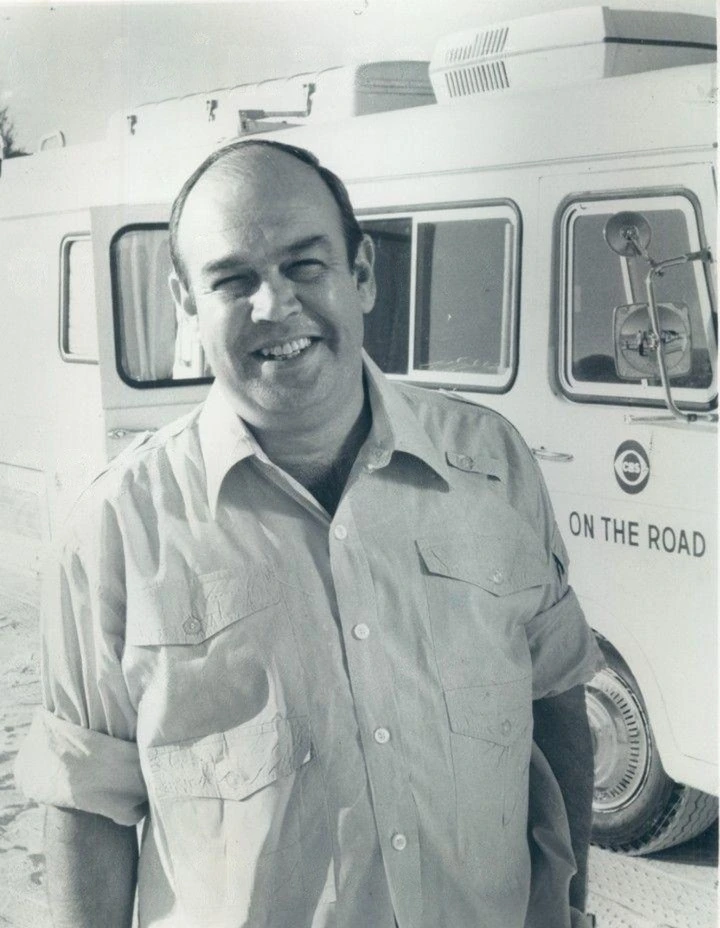
com/archive/local/1997/07/05/on-the-road-reporter-charles-kuralt-dies-at-62/4690f05a-4f4d-4a0e-ad38-0440c2e4c4b7/), at the age of 62. If you've landed here searching for his net worth, it's worth noting upfront that this is a very different financial profile from, say, a primetime anchor or a media executive, and the numbers you'll find across the web vary wildly for reasons we'll get into.
The Short Answer: What Was Charles Kuralt Worth at Death?
The honest answer is that no single verified, publicly filed figure exists for Charles Kuralt's total net worth at the time of his death. Based on the available evidence, including his career earnings, the estate litigation that followed his death, and contemporaneous reporting, a reasonable and defensible estimate places his net worth somewhere in the range of $1 million to $3 million at the time he died in 1997.
That figure reflects a comfortable but not extravagant wealth level, consistent with a long career in network television journalism rather than media ownership or executive compensation. The $10 million figure that circulates on some websites is not supported by any documented source. Neither is the sub-$700,000 range cited on others. The $1 million to $3 million range is where the evidence actually points.
How That Number Gets Estimated (and Why Sites Disagree)
This is where it gets important to understand methodology. Net worth estimates for deceased public figures are almost never drawn from a single verified source. Instead, researchers piece together career earnings, known assets, and any public legal or estate records. For Kuralt, three types of evidence are most useful: reported salary figures from his CBS career, the estate litigation that followed his death, and general knowledge of what network journalists of his stature earned in the 1980s and 1990s.
The most concrete salary figure on record comes from a 1994 Roanoke Times report citing Andy Rooney, which stated that Kuralt was walking away from a $6 million annual salary when he retired from CBS News Sunday Morning in April of that year. If accurate, that figure alone suggests Kuralt had substantial earning power at peak. However, a single year's salary is not net worth. Taxes, lifestyle costs, property, and the fact that he retired roughly three years before his death all factor into what actually remained in his estate.
The estate litigation provides a grounded, if partial, data point. After Kuralt's death, a Montana court case involving his estate became public record. The Montana Supreme Court ruled that Kuralt's daughters were required to pay $350,000 in estate taxes related to land Kuralt had left to his longtime mistress. The existence of a meaningful estate tax bill on a single parcel of real property implies the estate had real, assessable value, but it also reveals that assets were distributed across multiple recipients in ways that complicated valuation and transfer. This is not the profile of someone who died nearly broke, but it also doesn't point to a $10 million fortune.
As for the wide range of numbers across the web: most "celebrity net worth" sites use no primary methodology at all. One site pegs Kuralt at $1.3 million, another claims $10 million with a fabricated year-by-year table, and a third says the figure is somewhere between $500,000 and $700,000 while admitting the real number is "elusive." The New York Times has publicly questioned whether sites like CelebrityNetWorth, one of the most widely cited, have any real scientific basis behind their proprietary algorithm claims. For a figure like Kuralt, who left no publicly traded company, no disclosed investment portfolio, and no filed financial disclosures, these sites are largely guessing.
Career Earnings: Where Kuralt's Money Came From
To build a credible picture of Kuralt's finances, it helps to trace his income streams across a decades-long career. He wasn't a one-source earner, but his income was concentrated in a few areas.
CBS News salary and network television

Kuralt joined CBS News in 1957 and spent the better part of four decades there. His On the Road segments ran from 1967 onward, and he hosted CBS News Sunday Morning from 1979 until April 3, 1994. By the end of that run, the reported $6 million annual figure suggests he was among the highest-compensated journalists at the network. Even if that number is somewhat inflated or refers to a total compensation package rather than base salary, it's clear that his CBS tenure was by far his largest income source. Over a career spanning nearly four decades at a major network, cumulative earnings would have been substantial, though offset by taxes and living costs over that same period.
Books and writing
Kuralt was a prolific author. After retiring from CBS, he worked on "Charles Kuralt's America," published by Penguin Random House, which he completed before his death in 1997. Book advances for a journalist of his profile at a major publisher would have been meaningful, likely in the six-figure range, though book royalties alone rarely translate into significant net worth unless sales are exceptional. His earlier books, including "On the Road with Charles Kuralt" and "A Life on the Road," also contributed royalty income over the years. This was a real but secondary income stream.

After retirement from CBS, Kuralt remained a public figure and could command speaking fees consistent with his reputation. There's no documented record of large-scale endorsement deals, which fits his journalistic brand, but speaking engagements during his post-CBS years (1994 to 1997) would have provided additional income. This is a reasonable but not quantifiable line item given the lack of public records.
Real property and personal assets
The Montana estate litigation confirms Kuralt owned real property in addition to whatever liquid or financial assets he held. The land at the center of that dispute had enough value to generate a $350,000 estate tax obligation, which implies a property value well above that threshold. Real estate was clearly part of his asset picture, though the contested nature of the transfer means the exact valuation wasn't cleanly established in public records.
| Income Stream | Estimated Contribution | Notes |
|---|
| CBS News salary (career) | High (primary source) | Reported ~$6M/year near retirement; multi-decade tenure |
| Book advances and royalties | Moderate | Multiple published titles; Penguin Random House deal confirmed |
| Speaking fees (post-1994) | Low to moderate | No documented figures; consistent with his profile |
| Real property | Moderate | Montana land confirmed via estate litigation; $350K+ tax implied |
| Endorsements | Negligible/none documented | Inconsistent with his journalistic identity |
Comparing the Estimates You'll Find Online

Here's a direct comparison of the figures circulating on the web and how they hold up against actual evidence:
| Source Type | Estimate | Credibility Assessment |
|---|
| NetWorthList.org | $1.3 million | No methodology disclosed; likely underestimates given salary data |
| MoonChildrenFilms.com | $10 million | Non-authoritative; fabricated year-by-year table with no sourcing |
| ABTC (net worth article) | $500K–$700K | Acknowledges uncertainty; probably too low given estate tax evidence |
| Evidence-based estimate (this article) | $1M–$3M | Grounded in salary reports, estate litigation, and career context |
The $1 million to $3 million range is the most defensible. It accounts for the reality that even a journalist earning $6 million annually doesn't retain all of that, particularly after decades of taxes, retirement at age 58, and distributing assets across family and, as it turned out, a separate long-term relationship. It's also consistent with the estate tax signals from the Montana litigation. Think of it as a solidly upper-middle-class estate, not a media mogul's fortune.
Where to Verify This and What to Do Next
If you're doing serious research on Kuralt's finances, here's a practical checklist of where to look and how to evaluate what you find:
- Check public court records for the Montana estate case. The "In Re: the Estate of Charles Kuralt" case is accessible via FindLaw and related legal databases. It's the most primary document trail available and more reliable than any web estimate.
- Read contemporaneous obituaries and reporting. The Washington Post's July 5, 1997 obituary is a credible reference point for what was publicly known about his career and circumstances at death. Obituaries from major papers occasionally reference estate figures or financial context.
- Look for the $350,000 estate tax ruling. The Los Angeles Times' April 23, 2003 report on the Montana Supreme Court ruling is verifiable and gives you a concrete data point to anchor the estate's asset picture.
- Treat celebrity net worth aggregator sites with skepticism. Unless a site discloses its methodology and primary sources, treat those numbers as estimates of unknown reliability, especially for historical figures who left no public financial filings.
- Cross-check reported salary figures. The $6 million annual salary figure comes from one 1994 newspaper report citing Rooney. It's plausible but not independently verified. Use it as an upper bound for career-peak earnings, not a confirmed annual figure.
- Look at his published books through Penguin Random House for publication dates and any reported sales figures, which can help triangulate book income as a secondary stream.
Red flags to watch for: any site claiming to have Kuralt's net worth down to the exact dollar, any site that lists a figure above $5 million without citing a specific estate filing or verified source, and any site that doesn't acknowledge the contested nature of his estate at all. The reality is that Kuralt's financial picture is genuinely complicated by the Montana land dispute and the private nature of his estate probate.
Kuralt's financial story is a useful reminder that fame in journalism doesn't automatically translate to outsized wealth. His career was long, distinguished, and well-compensated by industry standards, but his net worth at death reflects the realities of a salaried career rather than equity ownership or entrepreneurial upside. For comparison, consider that Charles Trippy's net worth reflects a completely different era of media, built through YouTube and social content creation with very different income structures.
Similarly, someone like Charles Cross built wealth through an entirely different creative and publishing path. Charles Cross net worth is discussed in detail in a separate guide. Kuralt sits in the category of mid-to-late 20th century broadcast journalists: well-paid professionals whose wealth was real but rarely spectacular by today's media standards.
It's also worth noting that figures like Charles Krasne, who built wealth through business and media production rather than journalism, tend to have substantially different financial profiles than on-air talent of Kuralt's generation. The business side of media has always been more lucrative than the reporting side, which is part of why Kuralt's estate, while meaningful, wasn't in the tens of millions.
For those who find wealth profiles of creative and public figures genuinely interesting, digging into someone like Charles Krypell, who built his reputation and financial standing in the jewelry industry, or Charles William Criss, whose career in entertainment took a very different trajectory, shows just how differently wealth accumulates depending on the industry and the era. And for a look at how television production roles translate to net worth, Charles Pratt's net worth offers an interesting parallel from the scripted TV world.
The Bottom Line on Charles Kuralt's Net Worth
Charles Kuralt died on July 4, 1997, with an estate that the best available evidence suggests was worth somewhere between $1 million and $3 million. That estimate is grounded in his reported peak salary of $6 million annually at CBS, a career spanning nearly four decades at a major network, book income from multiple published titles, and the estate litigation in Montana that confirmed real property assets and a meaningful estate tax obligation.
It is not grounded in celebrity net worth aggregator sites, which disagree wildly and offer no transparent methodology for a historical figure like Kuralt. If you need a single number to work with, $2 million is a reasonable midpoint estimate. If you're doing legal, journalistic, or academic research, the Montana court records and contemporaneous newspaper reporting are your most reliable primary sources.